What was the Battle of Sekigahara?
Sekigahara is the battle that decided who would govern Japan. Around 160,000 men fought in a narrow valley in Mino Province for a single day, and by the afternoon Tokugawa Ieyasu had won so completely that no one challenged him again for fourteen years.
It is often called the largest battle of the samurai era. It is also, on inspection, less a battle than the visible result of a year of political negotiation: several Western contingents had already agreed not to fight, or to change sides.
Why did it happen?
Toyotomi Hideyoshi died in 1598 leaving a five-year-old heir, Toyotomi Hideyori, under a council of five great lords. Ieyasu, the strongest of them, began arranging marriages and alliances in breach of the agreed rules, and the death of Maeda Toshiie in 1599 removed the only man with the standing to stop him.
In 1600 Ieyasu marched east against the Uesugi. Ishida Mitsunari used the opening to raise an army in the name of the Toyotomi house, with Mori Terumoto as nominal commander-in-chief. Ieyasu turned around and came back.
Forces and sides
Both armies are usually given as roughly 80,000 each. Those totals include contingents that never engaged: the Mori and Chosokabe on Mount Nanguu, held in place by a secret agreement between Kikkawa Hiroie and the Tokugawa, and the Shimazu, who stood still through most of the day.
The number of men who actually fought was considerably smaller on the Western side than the paper strength suggests. That, more than tactics, is the story of the battle.
What happened?
Both armies moved into the valley overnight in rain and fog. The Western Army held the better ground — a horseshoe of hills around the Eastern position — and on a map appears to have had the advantage.
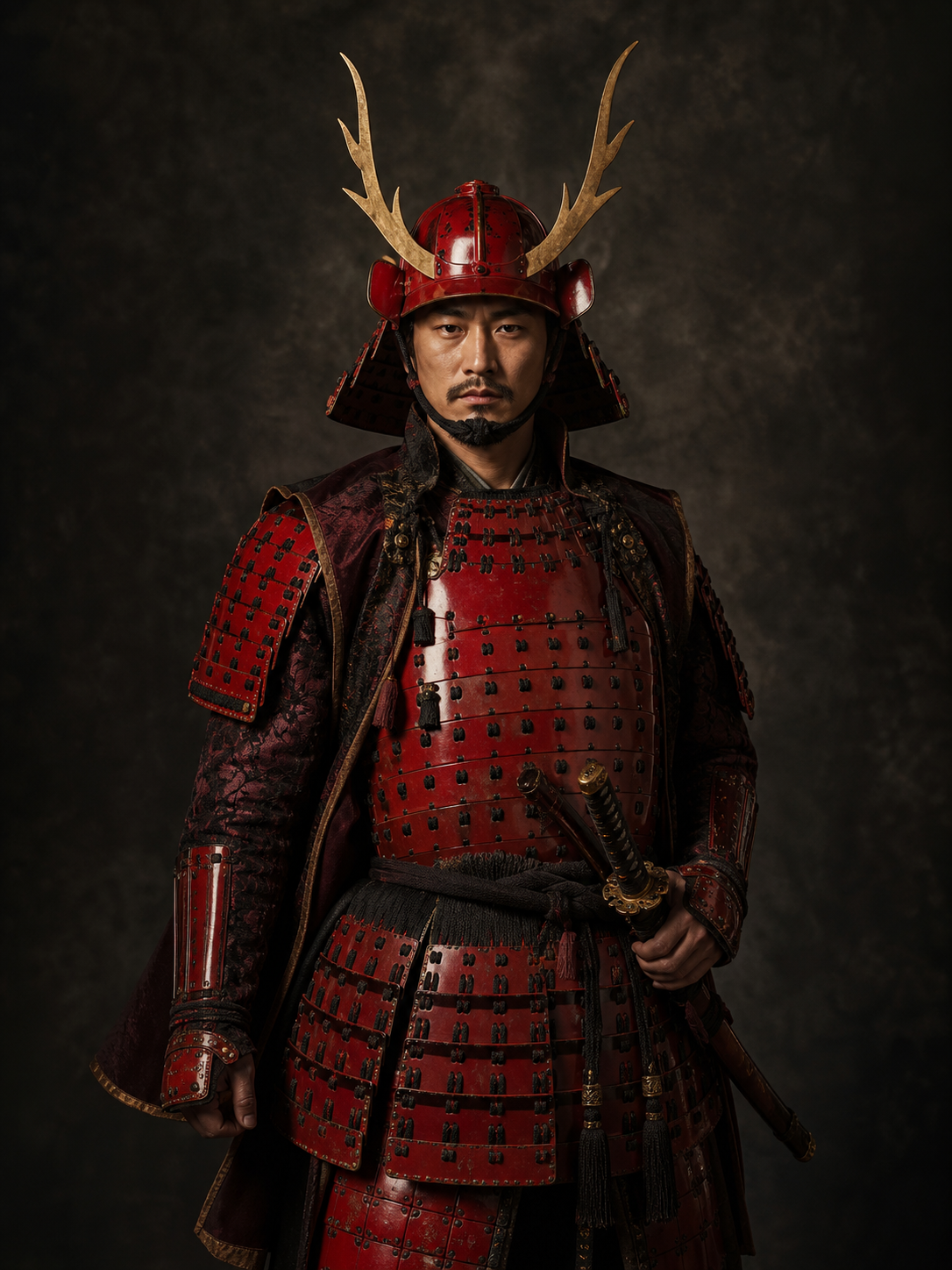
Fighting began around eight in the morning when Ii Naomasa pushed his red-armoured unit forward ahead of the agreed vanguard. For the next few hours the engagement was fierce but static, with Mitsunari's centre holding and repeated Eastern attacks failing to break it.
Mitsunari signalled repeatedly for the uncommitted Western contingents to attack. They did not move.
Around midday, Kobayakawa Hideaki's 15,000 men on Mount Matsuo — who had been in secret contact with the Tokugawa for weeks — charged downhill into the flank of Otani Yoshitsugu's force, on their own side. Otani's men held briefly and were destroyed; Otani took his own life. Several other Western units then changed sides on the spot.
The Western centre collapsed within about two hours. Shimazu Yoshihiro, surrounded, broke out forwards through the Eastern army and escaped with a few dozen men out of roughly 1,500.
Turning point
Kobayakawa's defection. The traditional account has Ieyasu ordering his gunners to fire on Kobayakawa's position to force a decision; whether that happened is debated, but the effect is not.
The deeper turning point was earlier and invisible: the agreements Ieyasu had made with Kobayakawa, Kikkawa and others before a shot was fired.
Outcome
Mitsunari was captured a few days later and beheaded in Kyoto with Konishi Yukinaga and Ankokuji Ekei. Western lords were dispossessed or reduced on a large scale, and their lands redistributed to Tokugawa allies.
Ieyasu was appointed shogun in 1603. The Toyotomi were left in Osaka with a reduced domain — an unresolved problem settled fifteen years later at the Siege of Osaka.
Why it mattered
Sekigahara established the Tokugawa shogunate, which governed Japan until 1868 and gave the country two and a half centuries without civil war.
The redistribution of domains afterwards created the categories — fudai lords who had been Tokugawa allies before the battle, tozama lords who submitted after it — that structured Japanese politics for the next 265 years. Satsuma and Choshu, the two domains that overthrew the shogunate in the 1860s, were both tozama houses that had been on the losing side in 1600.