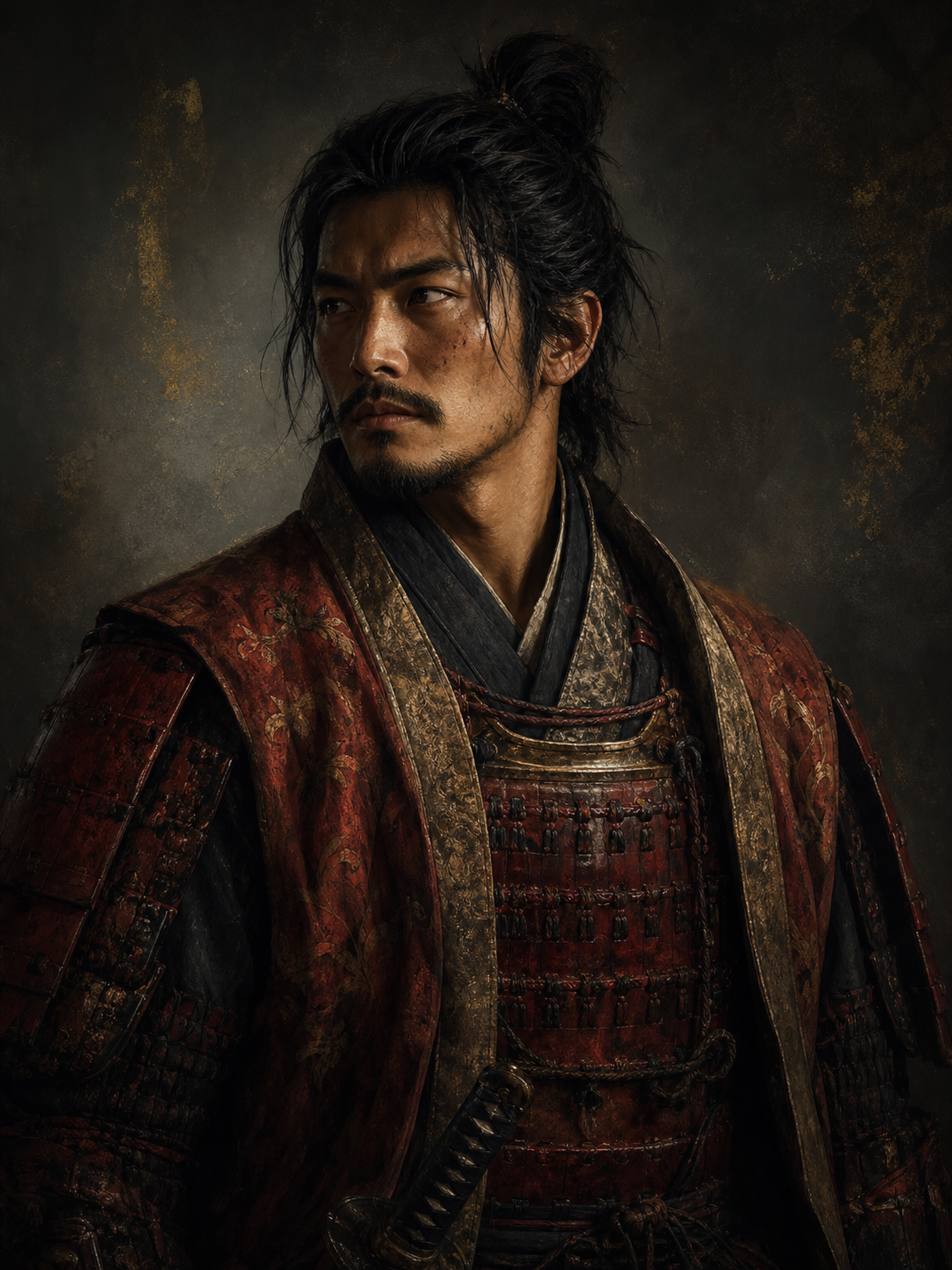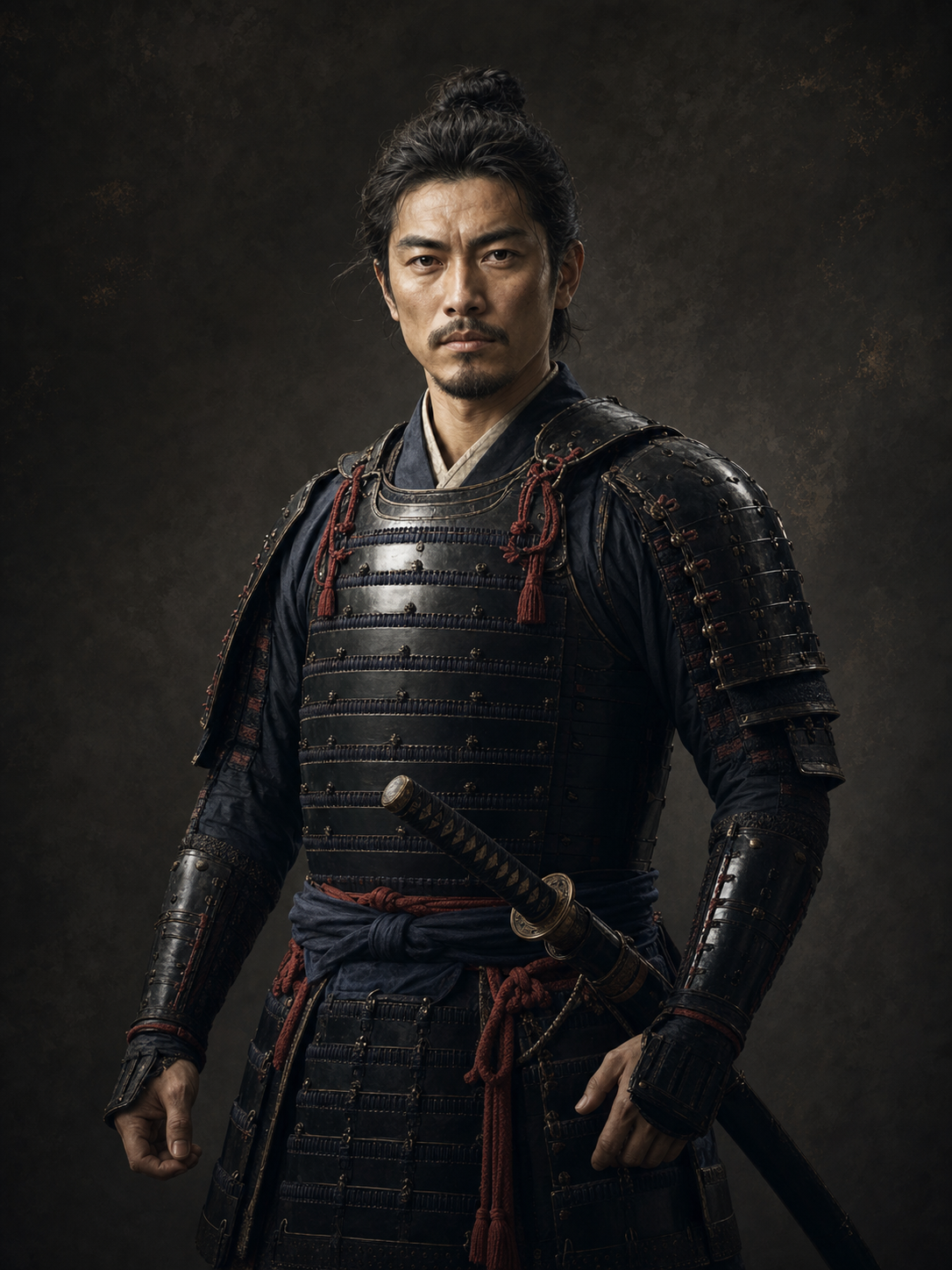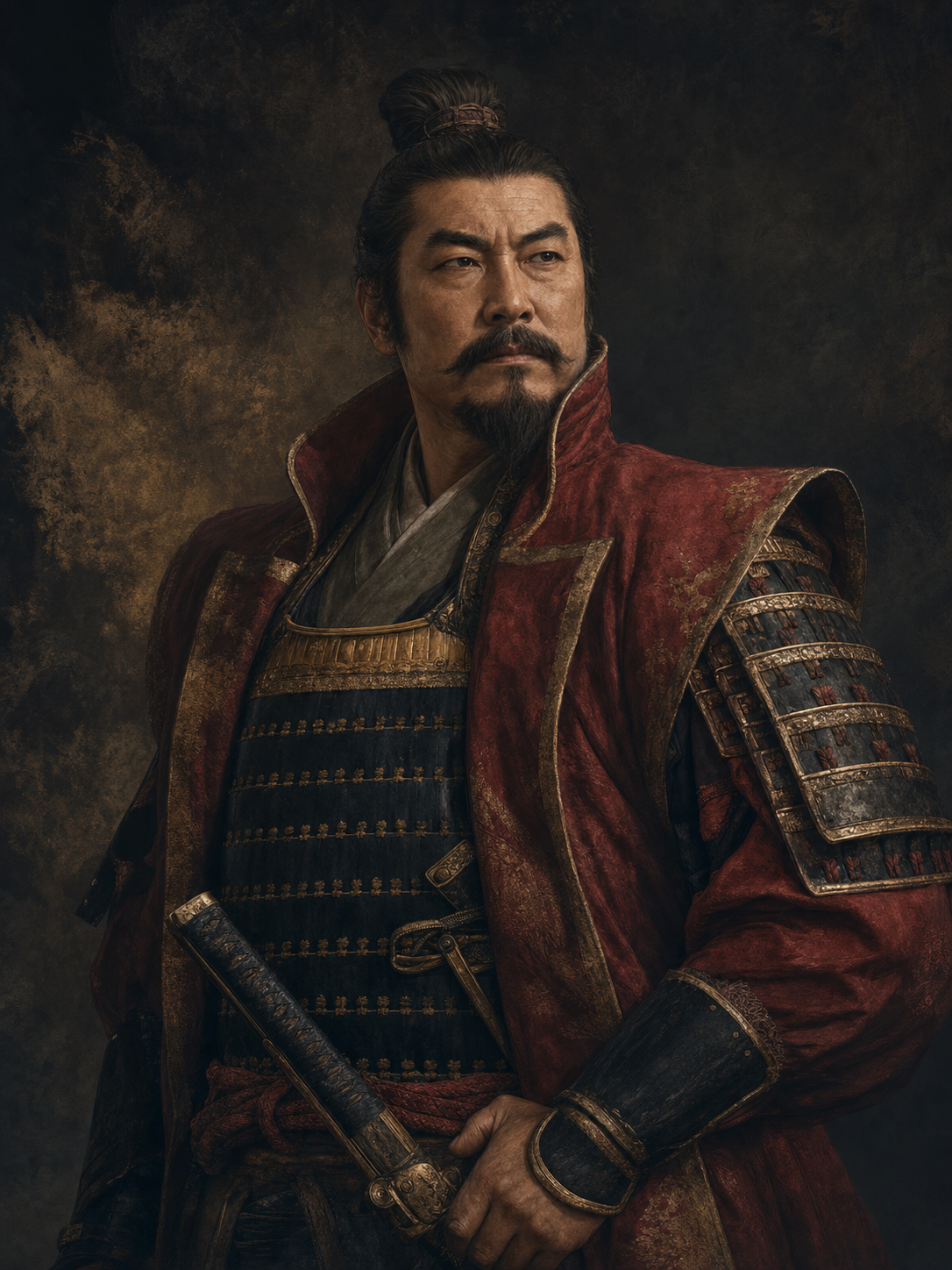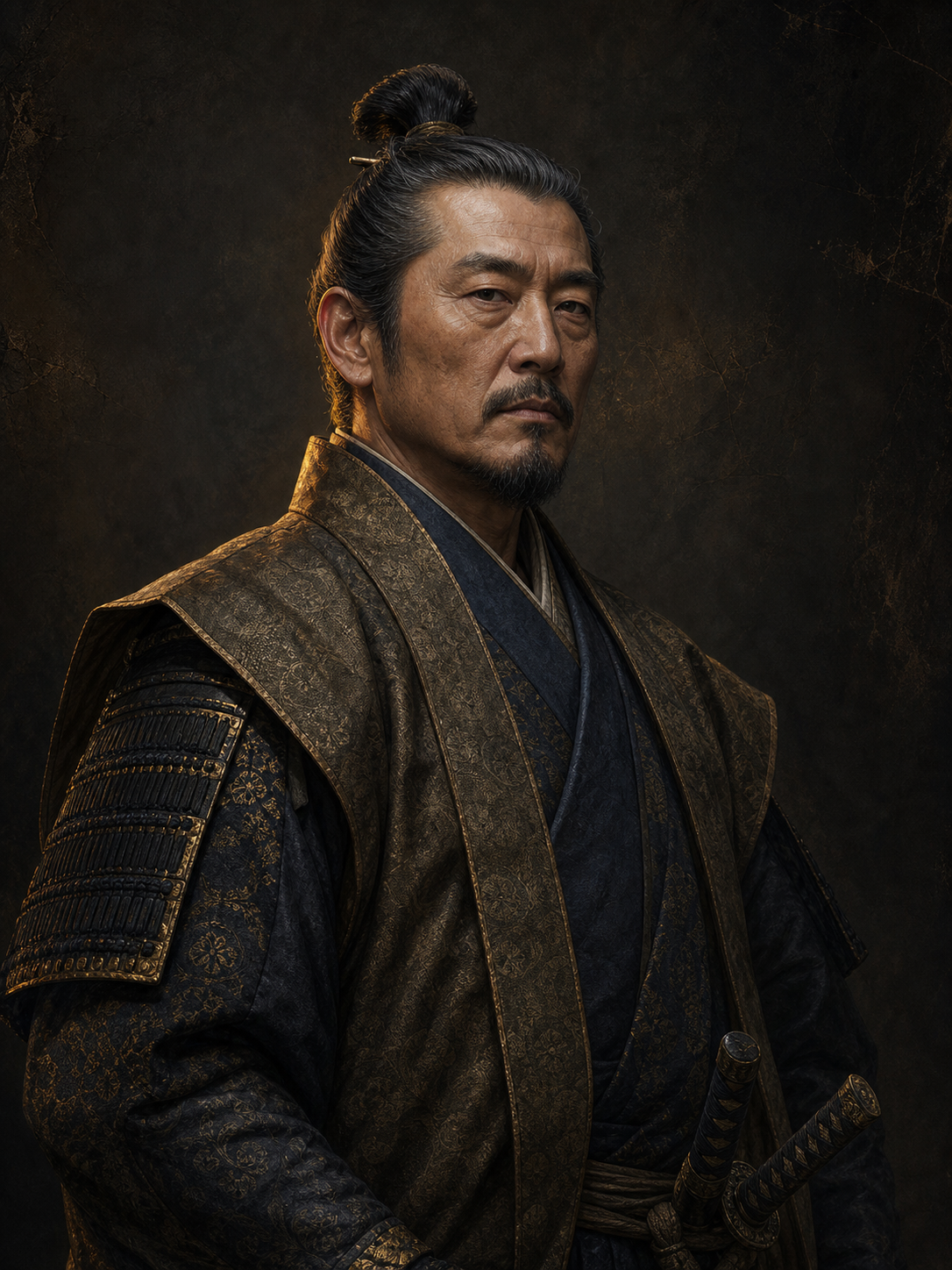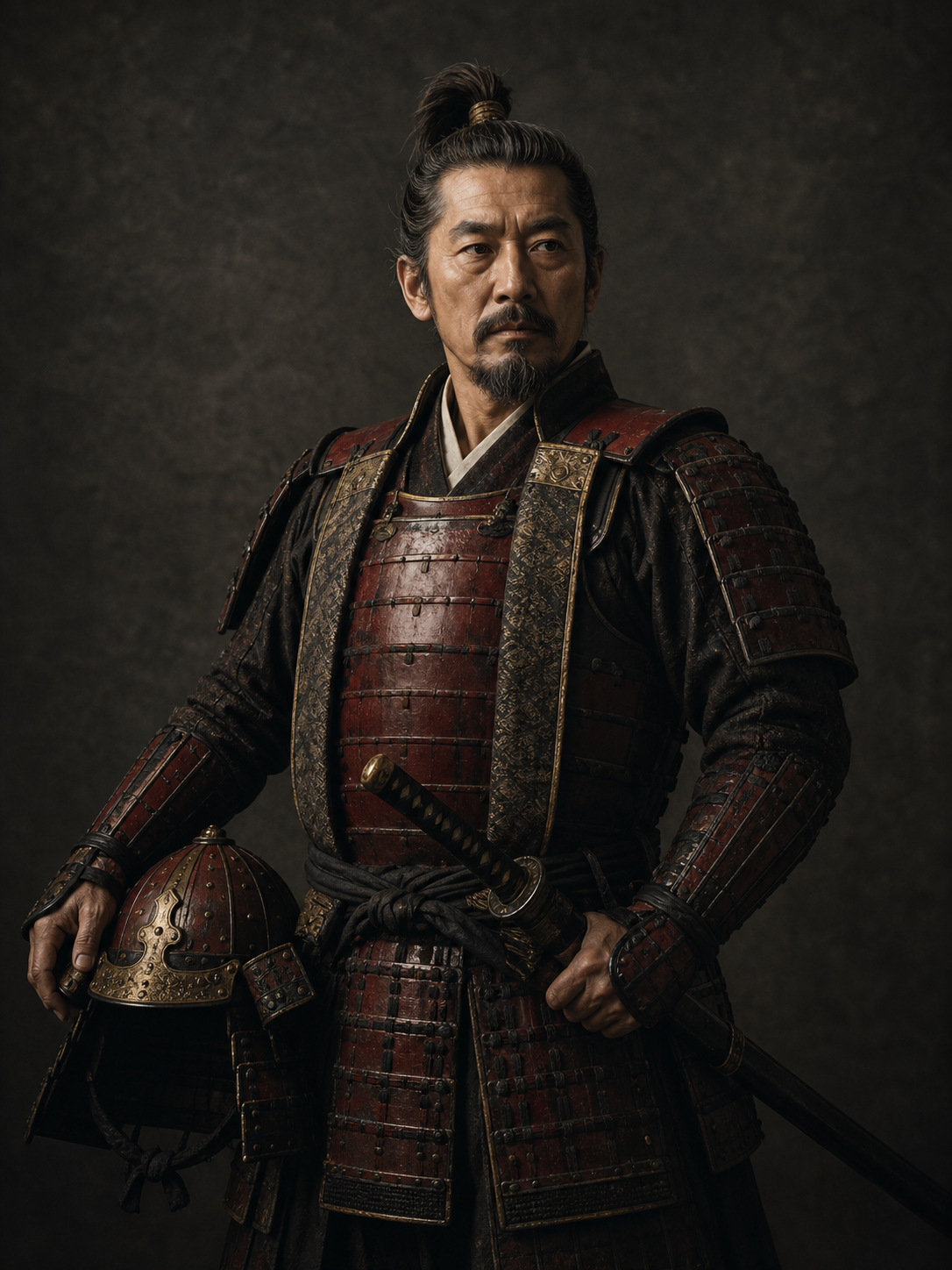
Who was Masayuki?
Sanada Masayuki (1547–1611) ruled a small domain in the mountains of Shinano Province and twice defeated Tokugawa armies many times the size of his own. He is the reason the Sanada name carries the meaning it does in Japan: a small house that outfought much larger ones by knowing its ground.
He began as a page and then a commander under Takeda Shingen, and after the Takeda fell in 1582 he survived by changing allegiance repeatedly — to the Oda, the Hojo, the Uesugi, the Tokugawa and the Toyotomi — as the balance around him shifted.
Why is Masayuki important?
- He defeated a Tokugawa invasion at Ueda in 1585 with a garrison a fraction of its size.
- At the Second Battle of Ueda in 1600 he held up 38,000 troops under Tokugawa Hidetada, who then arrived too late for Sekigahara.
- He deliberately split his family between both sides in 1600 so the house would survive either outcome — and it did.
- His younger son Sanada Nobushige became the most celebrated warrior of the era's final battle.
Survival after the Takeda
When the Takeda were destroyed in 1582, Masayuki held territory claimed by three larger powers at once. He built Ueda Castle in that year, choosing a site that used the Chikuma river and the surrounding terrain as part of the defences.
In 1585 the Tokugawa demanded he hand over Numata Castle as part of a deal with the Hojo. He refused, switched allegiance to the Uesugi, and beat the punitive expedition sent against him.
The second siege of Ueda
In 1600 the Sanada were summoned to join the Tokugawa march north. Masayuki and his younger son turned back and declared for the Western side, while his elder son Sanada Nobuyuki stayed with the Tokugawa. The family tradition holds that this was a deliberate division agreed among the three of them.
Hidetada, Ieyasu's heir, stopped to reduce Ueda with a force reported at 38,000. He never took it, and he missed the Battle of Sekigahara entirely — a failure that damaged him for years.
Exile
After the Tokugawa victory, Masayuki and his younger son were condemned to death. Nobuyuki, with the backing of his father-in-law Honda Tadakatsu, obtained a commutation to exile at Kudoyama in the mountains of Kii Province.
Masayuki lived there under guard for eleven years and died in 1611, three years before the Toyotomi called his son out of exile for the final war.
Legacy
Ueda Castle's reputation as the fortress no Tokugawa army could take is the foundation of the Sanada legend, and the modern city of Ueda is built around it.
The 2016 NHK drama Sanada Maru brought the family's story to a wide audience again; as always, the drama fills gaps the documents leave open.