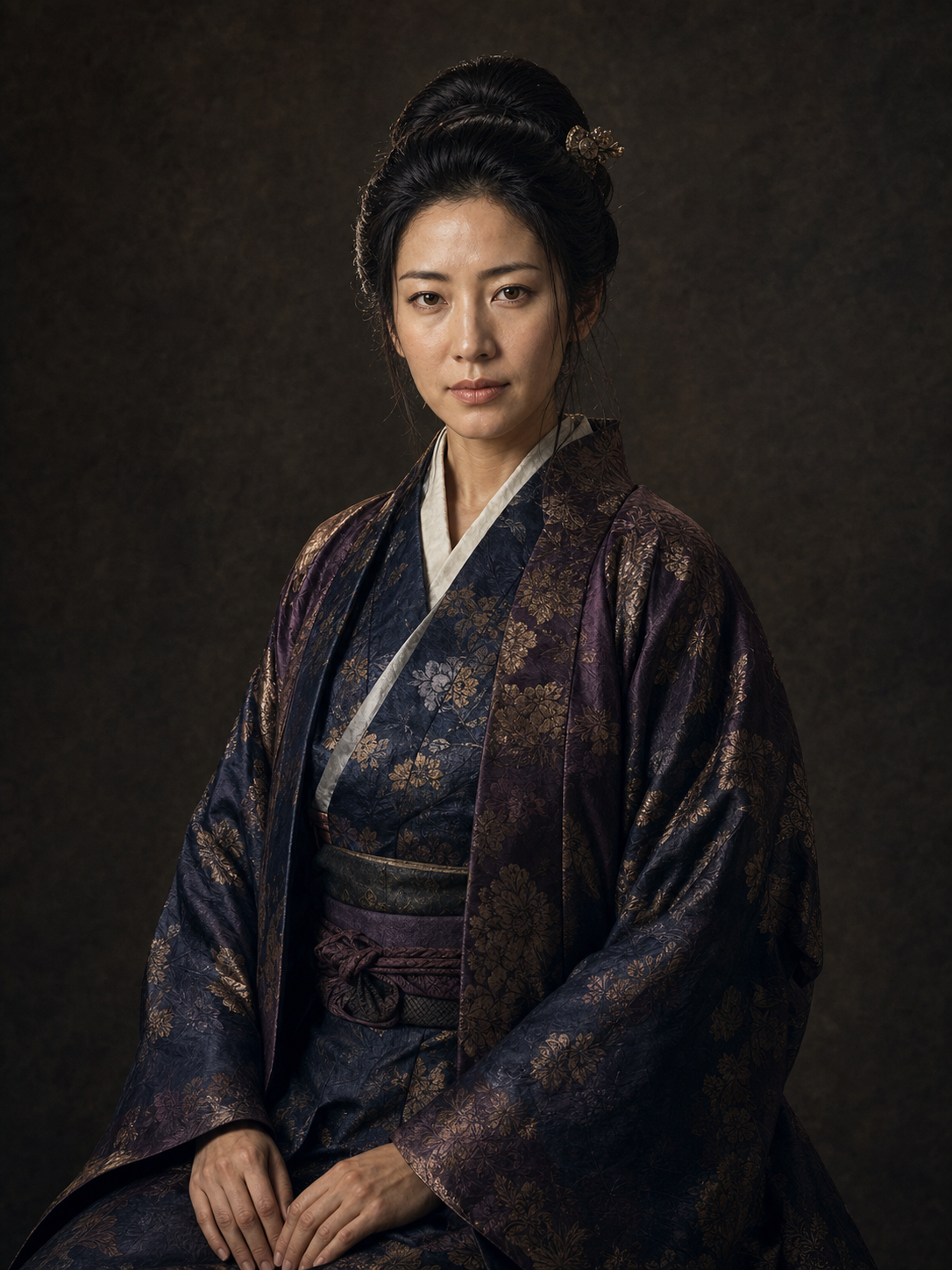
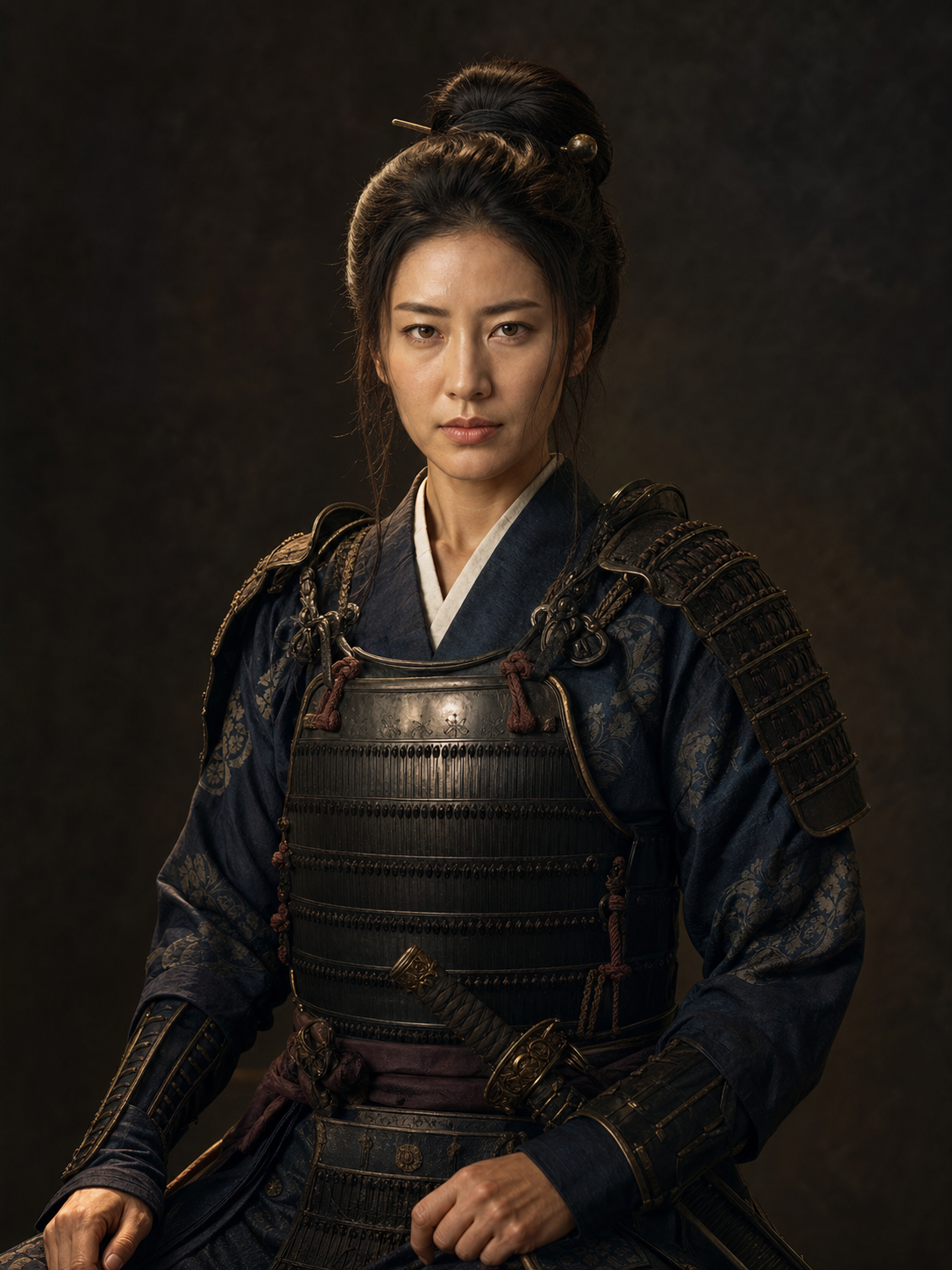
Women appear constantly in Sengoku sources — as heads of households, as parties to property disputes, as negotiators, as hostages, and occasionally in armour. They rarely appear as commanders in the field, and the popular English phrase "female samurai" flattens a much more interesting reality.
The honest summary is that warrior-class women exercised real authority through law, property and family, that a small number did fight, and that the evidence for individual cases varies from solid to almost nothing.
What authority women actually held
In the medieval period, women of warrior families could inherit and hold land in their own names, and documents issued under a widow's or a daughter's authority survive in some numbers. A lord's wife or mother frequently ran the domain's internal affairs while he was campaigning, and could act for him in negotiations.
That position narrowed over the following century. Toyotomi Hideyoshi's reforms and the Tokugawa settlement both formalised inheritance through male heirs, and the Edo period was, in legal terms, more restrictive for women of this class than the Sengoku period had been.
Marriage as diplomacy
Nearly every alliance in this period was sealed by a marriage, which means that women were routinely moved between houses as the political instrument that held a treaty together — and were left in an impossible position when it broke.
Oichi, Oda Nobunaga's sister, was married to Azai Nagamasa to seal an alliance; when Nagamasa turned on Nobunaga she stayed with her husband until his defeat, then was married again to Shibata Katsuie and died with him at Kitanosho in 1583. Her three daughters ended up on both sides of the final war: the eldest, Yodo-dono, was the mother of Toyotomi Hideyori, and the youngest married the second Tokugawa shogun.
Hosokawa Gracia
Hosokawa Gracia is the best-documented woman of the period, because the Jesuits wrote about her in detail. Daughter of Akechi Mitsuhide and wife of Hosokawa Tadaoki, she was confined for two years as a traitor's daughter, converted to Catholicism, and died in Osaka in 1600 refusing to be taken hostage against her husband.
Her death had a direct political effect: it made the hostage-taking policy untenable, which helped the Tokugawa side.
Ii Naotora
Ii Naotora is recorded as head of the Ii house in Totomi during the 1560s, under the name Jiro Hoshi, after the family's adult men had been killed or executed. She held the house together long enough for the infant Ii Naomasa to grow up and become one of the leading Tokugawa generals.
Her case is also a live historiographical dispute: a document that came to light in 2016 has been read by some historians as indicating that Jiro Hoshi was a man. The debate is unresolved.
Women who fought
Some did. Tachibana Ginchiyo, who inherited her father's house in Kyushu, is recorded as arming her women attendants during the 1600 crisis. Accounts describe Myorin-ni defending a castle in Bungo against a Shimazu force. Naginata training for women of warrior households is well attested.
These are individual cases, and the evidence for each varies. What they do not support is a general category of "female samurai" operating as battlefield commanders, and applying that label indiscriminately obscures the authority women actually held.
The term onna-musha ("woman warrior") is used in modern Japanese writing for documented cases of women who fought. It is not a period term, and it is not a rank or a status. Treat it as a description of an act, not of a class.
Nohime and the limits of the record
Nohime, the daughter of Saito Dosan and wife of Oda Nobunaga, is one of the most frequently dramatised women of the era. Almost nothing about her is documented: her name, her later life and her death are all uncertain, and much of what is repeated about her comes from Edo-period literature and modern fiction.
She is a useful reminder that the visibility of a woman in popular culture has very little to do with how much we actually know about her. This site does not give her a page for that reason.