Who was Tadakatsu?
Honda Tadakatsu (1548–1610) was the most celebrated fighting man in Tokugawa Ieyasu's service and one of the four generals traditionally called the Tokugawa Shitenno, the "Four Guardian Kings". He fought in essentially every Tokugawa campaign from his teens to Sekigahara.
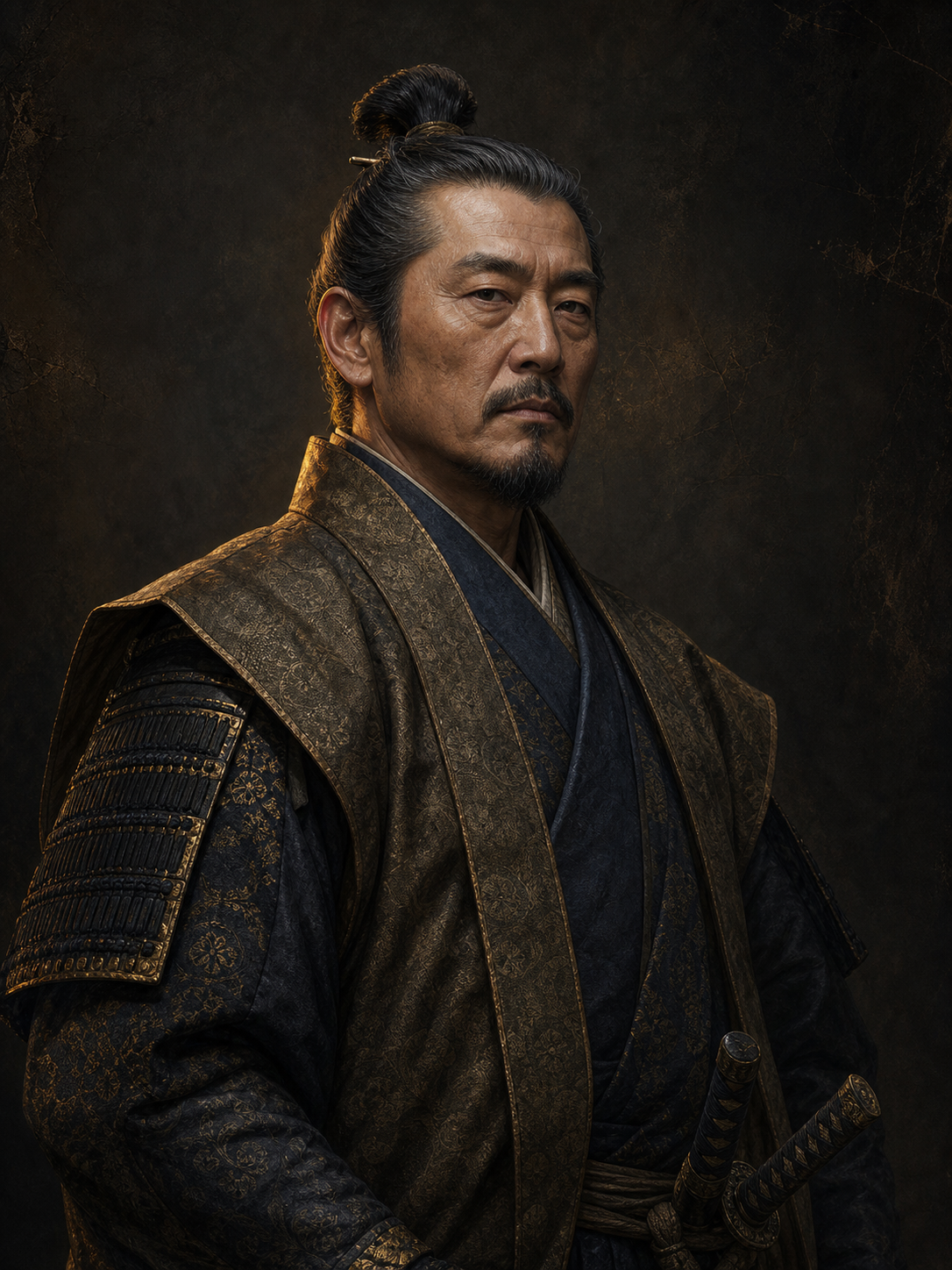
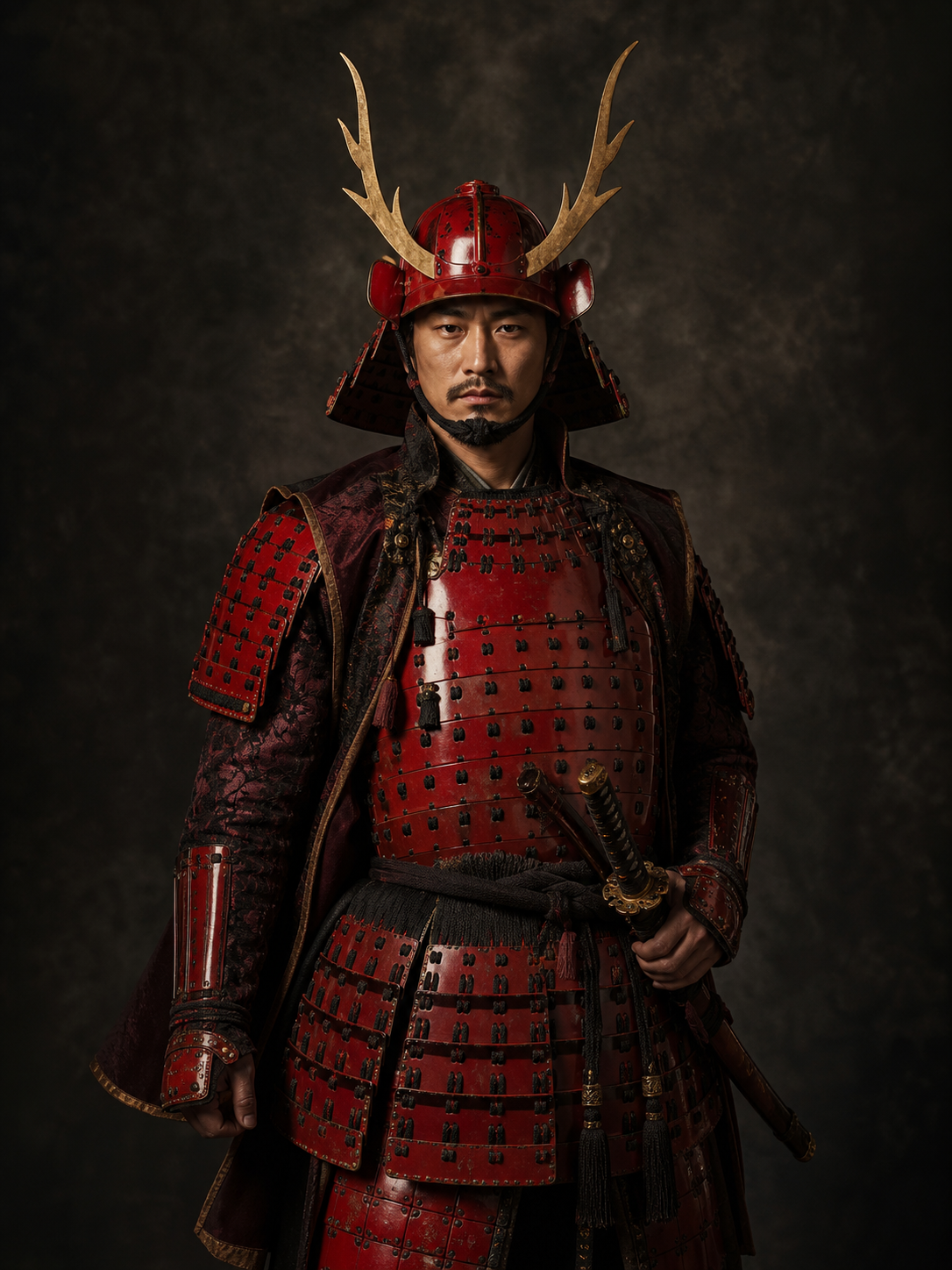
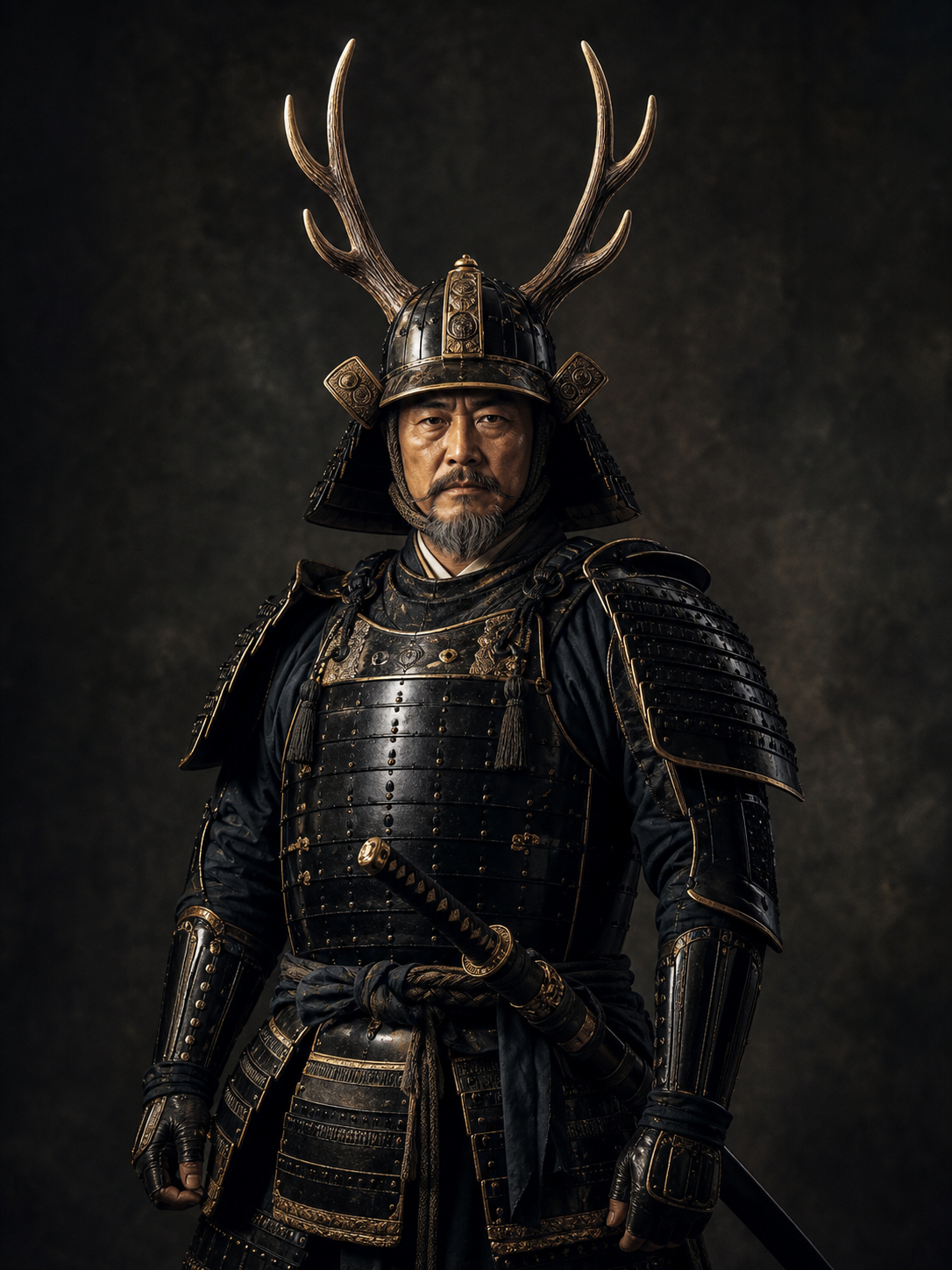
He is visually unmistakable in Japanese art and games: a black-lacquered armour, a Buddhist rosary worn across the chest, and a helmet with enormous deer antlers. His spear, Tonbogiri — "dragonfly cutter", from the story that a dragonfly landing on the blade was cut in two — is counted among the three great spears of Japan.
Why is Tadakatsu important?
- He was the field commander Ieyasu relied on most, from Mikatagahara in 1572 to Sekigahara in 1600.
- His covering action during the retreat from Mikatagahara helped save Ieyasu's army from destruction.
- At Komaki and Nagakute he faced down a far larger Toyotomi force at the Ryusenji river crossing, an act Hideyoshi himself is reported to have praised.
- His daughter's marriage to Sanada Nobuyuki is why the Sanada house survived the fall of the Western side in 1600.
A career at the front
Tadakatsu's first battle was at thirteen, in the campaign around Okehazama. He fought through the Mikawa Ikko uprising, the Takeda wars, Battle of Mikatagahara, Battle of Nagashino, Battle of Komaki and Nagakute and finally the Battle of Sekigahara.
The claim usually attached to him — that he fought in fifty-seven engagements without receiving a serious wound — comes from Edo-period Tokugawa compilations. It is a tradition rather than a verified count, but the underlying point, that he survived an exceptionally long front-line career, is well supported.
Komaki and Nagakute
The moment most often cited is from the 1584 campaign against Toyotomi Hideyoshi. With a very small force, Tadakatsu positioned himself at a river crossing directly in the path of the Toyotomi main army to buy Ieyasu time.
Hideyoshi, by the traditional account, ordered his troops not to fire on him out of respect. The story is repeated in several Edo-period sources and cannot be independently confirmed, but it reflects the reputation Tadakatsu had among his enemies.
Later years
After Sekigahara he was given Kuwana in Ise Province, where he built the castle town and reorganised the river crossings on the Tokaido highway. He seems to have found peacetime administration less congenial than war, and his later letters suggest a man conscious that his kind of career was ending.
He died in 1610, six years before Ieyasu. The Honda house continued as a daimyo family through the Edo period.
Legacy
Tadakatsu is a staple of Japanese games, usually as an unstoppable armoured giant. The exaggeration is at least built on something real: contemporaries on both sides regarded him as the outstanding warrior of the Tokugawa army.
His armour and the deer-horn helmet survive and are among the most recognisable pieces of Sengoku equipment anywhere.