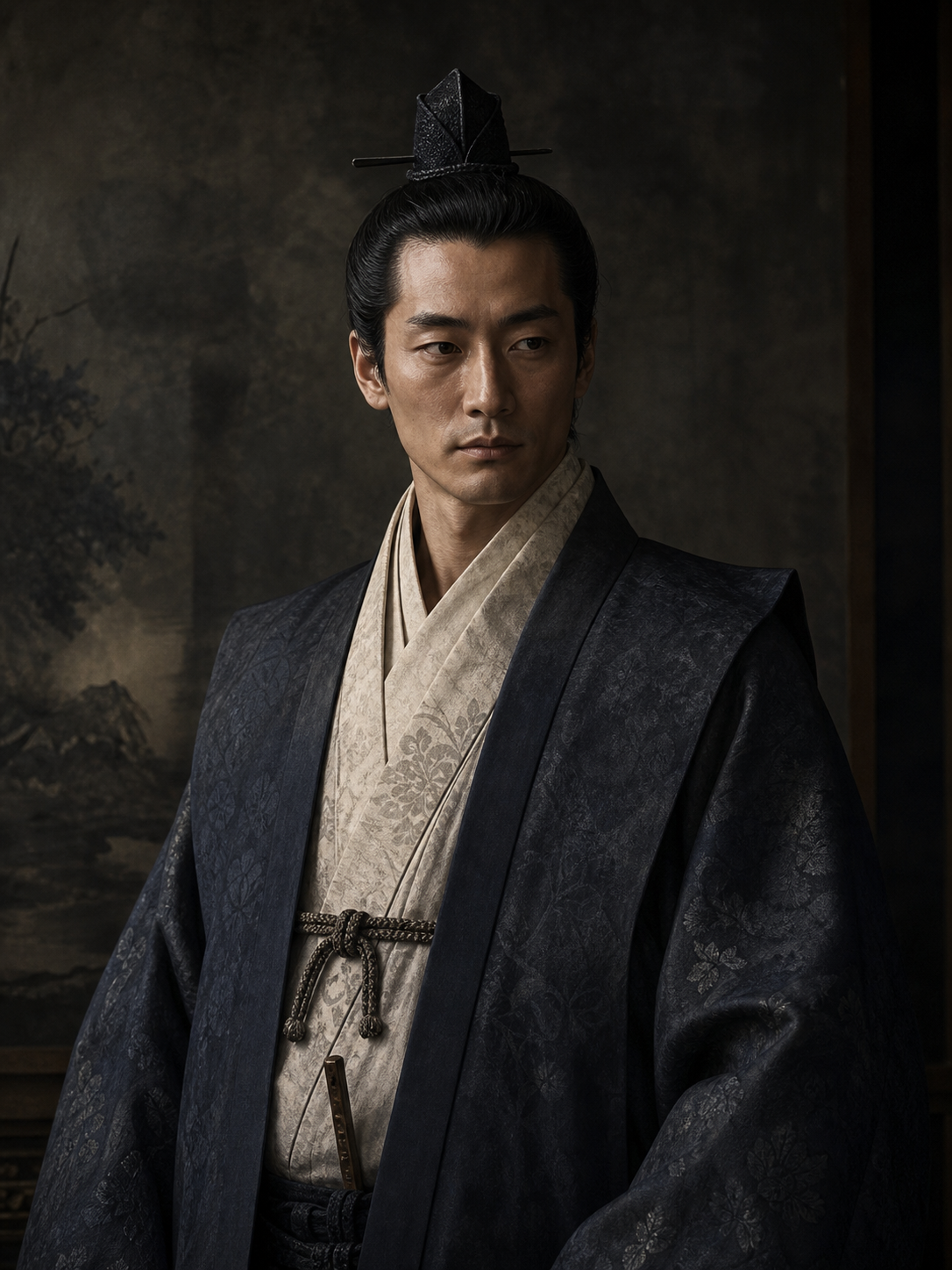
Who was Mitsunari?
Ishida Mitsunari (1560–1600) was the most senior civil administrator of the Toyotomi government and the man who organised the coalition that fought Tokugawa Ieyasu at the Battle of Sekigahara in 1600. He lost, was captured, and was executed in Kyoto.
He is the era's great example of a bureaucrat rather than a battlefield commander. He ran land surveys, supply chains for the Korean campaigns, and the finances of a national government — competence that made him indispensable to Toyotomi Hideyoshi and deeply unpopular with the field generals who had to work under his auditing.
Why is Mitsunari important?
- He was one of the five commissioners who actually administered Japan under Hideyoshi.
- He organised the Western coalition of 1600, the last serious attempt to preserve Toyotomi rule.
- His defeat at Sekigahara settled the question of who would govern Japan for the next 265 years.
- The bitterness between him and Hideyoshi's veteran commanders is a case study in how administrative power and military prestige collided in the new unified state.
Rise as an administrator
Mitsunari came from a modest family in Omi Province, beside Lake Biwa. The famous story of his first meeting with Hideyoshi — serving three cups of tea at three carefully judged temperatures — is an Edo-period anecdote, but it points at something real: he was noticed for judgement rather than for fighting.
He became one of the five bugyo, the commissioners who ran the Toyotomi state, and was given Sawayama Castle. During the Korean campaigns he served as an inspector, reporting on the conduct of commanders in the field. That role made him permanent enemies of men such as Kato Kiyomasa and Fukushima Masanori.
After Hideyoshi's death
Hideyoshi died in 1598 leaving a child heir. Ieyasu began ignoring the agreed rules — arranging marriages between daimyo houses without approval, and building his own bloc. Mitsunari, whose protector Maeda Toshiie died in 1599, was driven out of Osaka by a group of hostile generals and forced into semi-retirement.
In 1600, while Ieyasu was campaigning in the north against the Uesugi, Mitsunari raised an army in the name of the Toyotomi house and its heir. Mori Terumoto was made nominal commander-in-chief; the real organiser was Mitsunari.
Sekigahara and execution
The Western Army held good ground at Sekigahara and, on paper, had the numbers. It lost because several of its own contingents had already been negotiated away by the Tokugawa side. The defection of Kobayakawa Hideaki during the battle collapsed the Western right. See Battle of Sekigahara.
Mitsunari escaped the field, was captured a few days later, paraded, and beheaded in Kyoto together with Konishi Yukinaga and the monk Ankokuji Ekei. He was forty.
Legacy
For most of the Edo period Mitsunari was written as the villain of Sekigahara, which is unsurprising given who was in charge. Since the twentieth century the assessment has shifted: he is now generally presented as a capable and stubborn official who was loyal to a dying regime and was out-manoeuvred politically before the battle began.
His friendship with Otani Yoshitsugu, who joined him at Sekigahara knowing the odds, is the human story usually told alongside the politics — though it too has been embellished considerably in fiction.