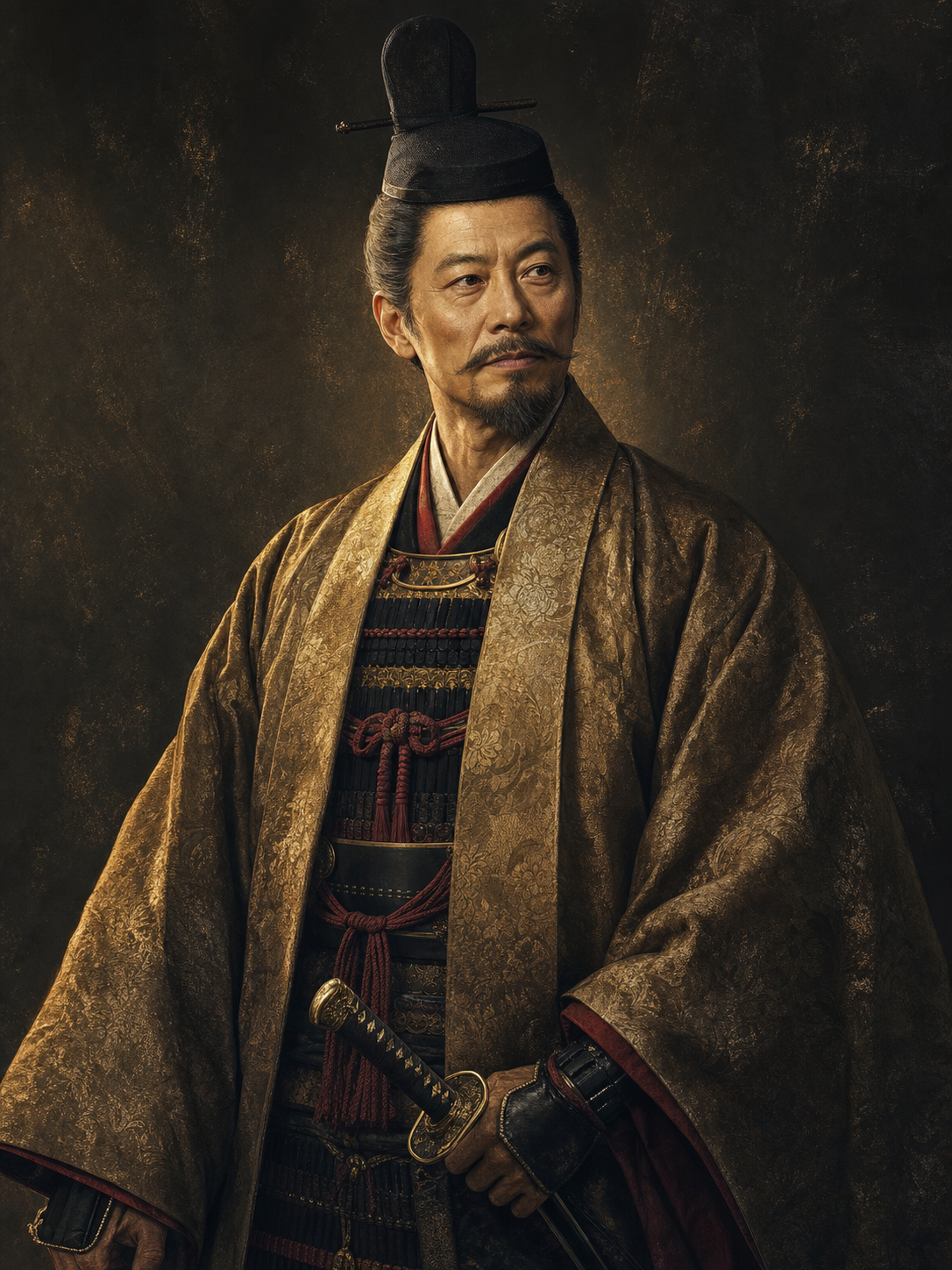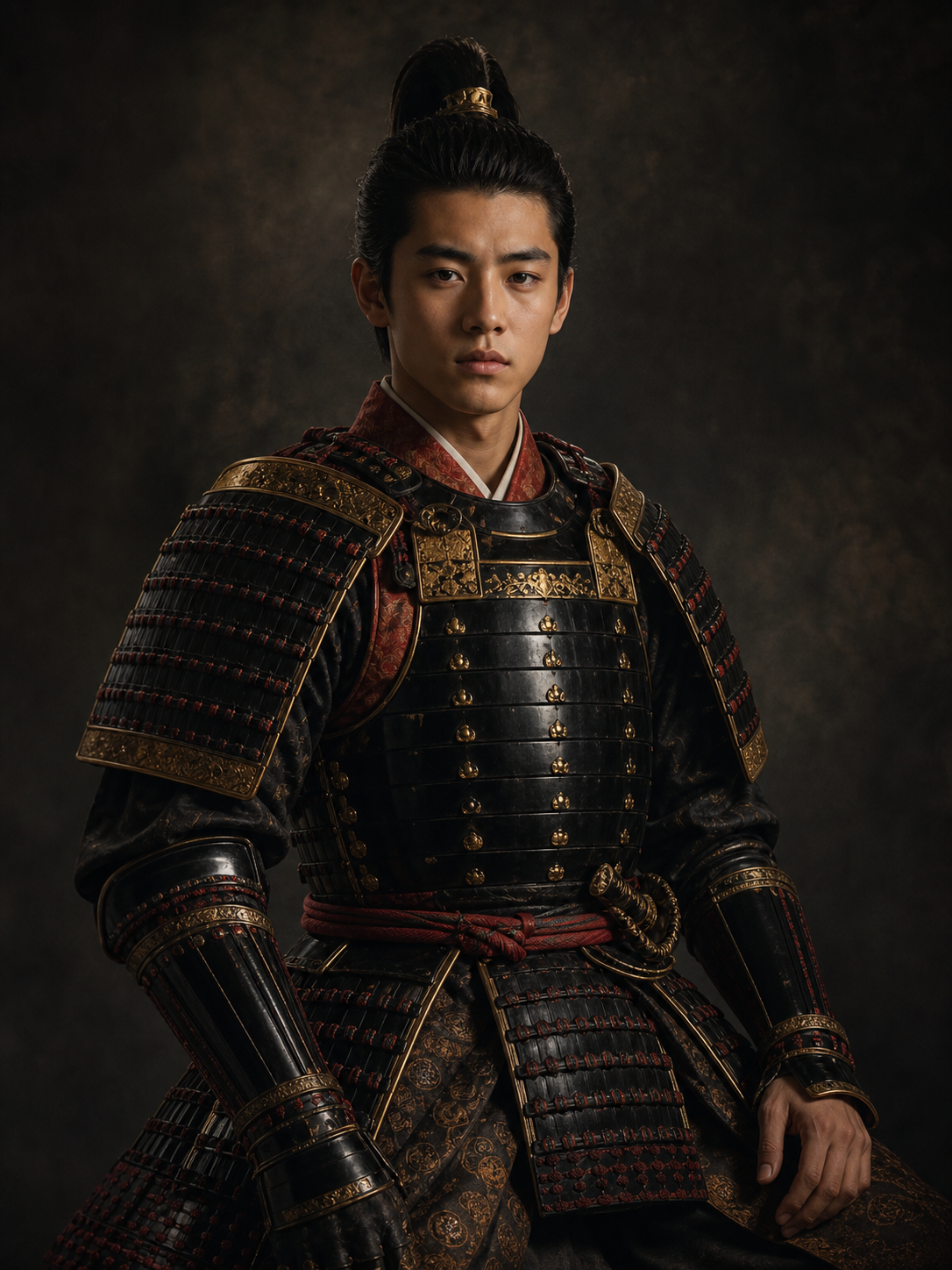
Who was Hideyori?
Toyotomi Hideyori (1593–1615) was the son and designated heir of Toyotomi Hideyoshi. He was five when his father died, seven when the Battle of Sekigahara destroyed the coalition fighting in his name, and twenty-two when Osaka Castle fell and he died in its ruins.
He never governed. His life is the story of what happened around him: a regency that collapsed, a rival who took the shogunate, and a slow squeeze that ended in the last battle of the Sengoku period.
Why is Hideyori important?
- His existence was the unresolved problem of the Tokugawa settlement — a legitimate alternative centre of loyalty.
- The Osaka campaigns fought in his name were the final military action of the era.
- The temple bell inscription used as the pretext for war in 1614 is one of the most famous manufactured casus belli in Japanese history.
- His death ended the Toyotomi line and closed the period of civil war.
A shrinking inheritance
After Sekigahara, Tokugawa Ieyasu did not destroy the Toyotomi; he reduced them. Hideyori kept Osaka Castle and a domain in the surrounding provinces, and was treated as a great lord rather than a national ruler. His mother Yodo-dono held effective authority.
He married Ieyasu's granddaughter Senhime as a child, which was intended to bind the houses and instead simply postponed the question.
The bell at Hoko-ji
In 1614 the Toyotomi completed the rebuilding of the Great Buddha hall at Hoko-ji in Kyoto, a project Ieyasu had encouraged partly because it drained their treasury. The inscription on the new bell included a phrase containing the characters of Ieyasu's name split by another character.
Tokugawa scholars declared this a curse on the shogun. The reading was almost certainly a pretext, and it served: it gave the Tokugawa a public reason to demand terms Hideyori could not accept. See Siege of Osaka.
The fall of Osaka
Ronin — masterless warriors, many of them men who had lost their lords in 1600 — gathered at Osaka in tens of thousands, among them Sanada Nobushige and Chosokabe Morichika. The winter campaign of 1614 ended in a truce whose terms allowed the Tokugawa to fill in the castle's outer moats.
The summer campaign of 1615 was therefore fought outside the walls. After the defeat at Tennoji, Hideyori and Yodo-dono took their own lives in the burning castle. His young son was executed; his daughter was sent to a convent.
Legacy
Rumours that Hideyori escaped to Kyushu or to the Ryukyus circulated for centuries and are the basis of several folk traditions. There is no evidence for them.
With his death the Tokugawa declared the era of Genna Enbu — "the laying down of arms in the Genna era". The Sengoku period is conventionally taken to end here.