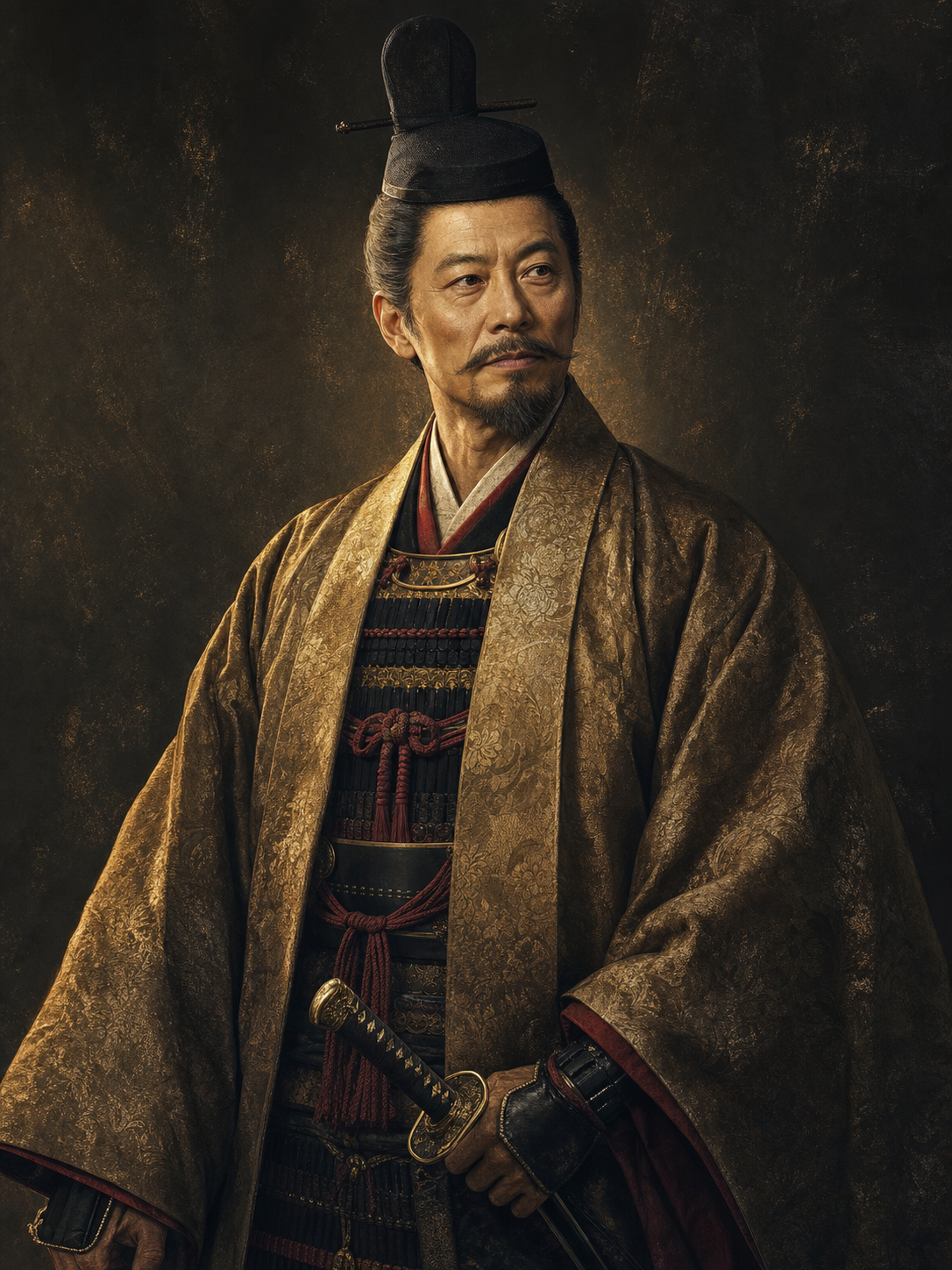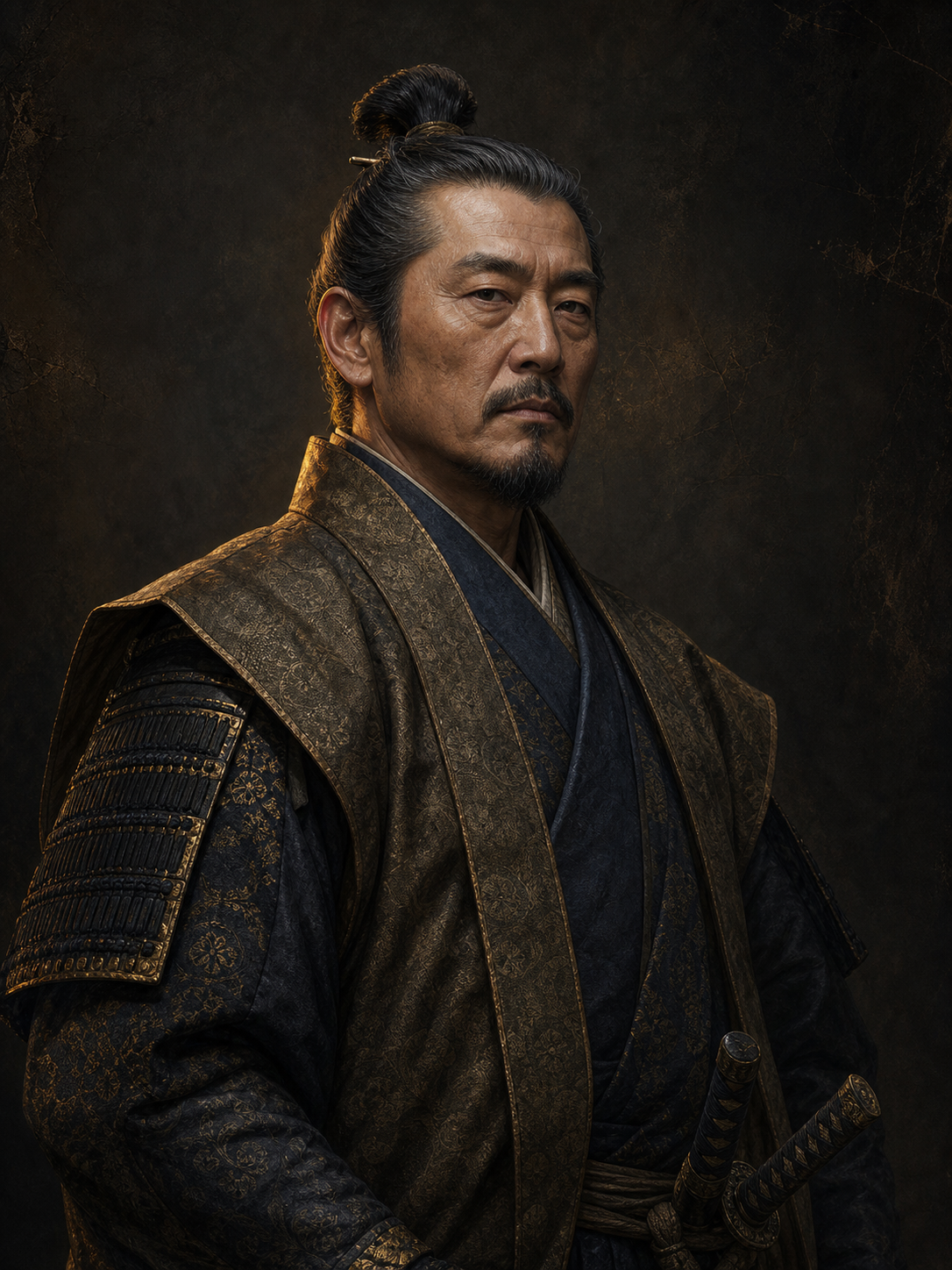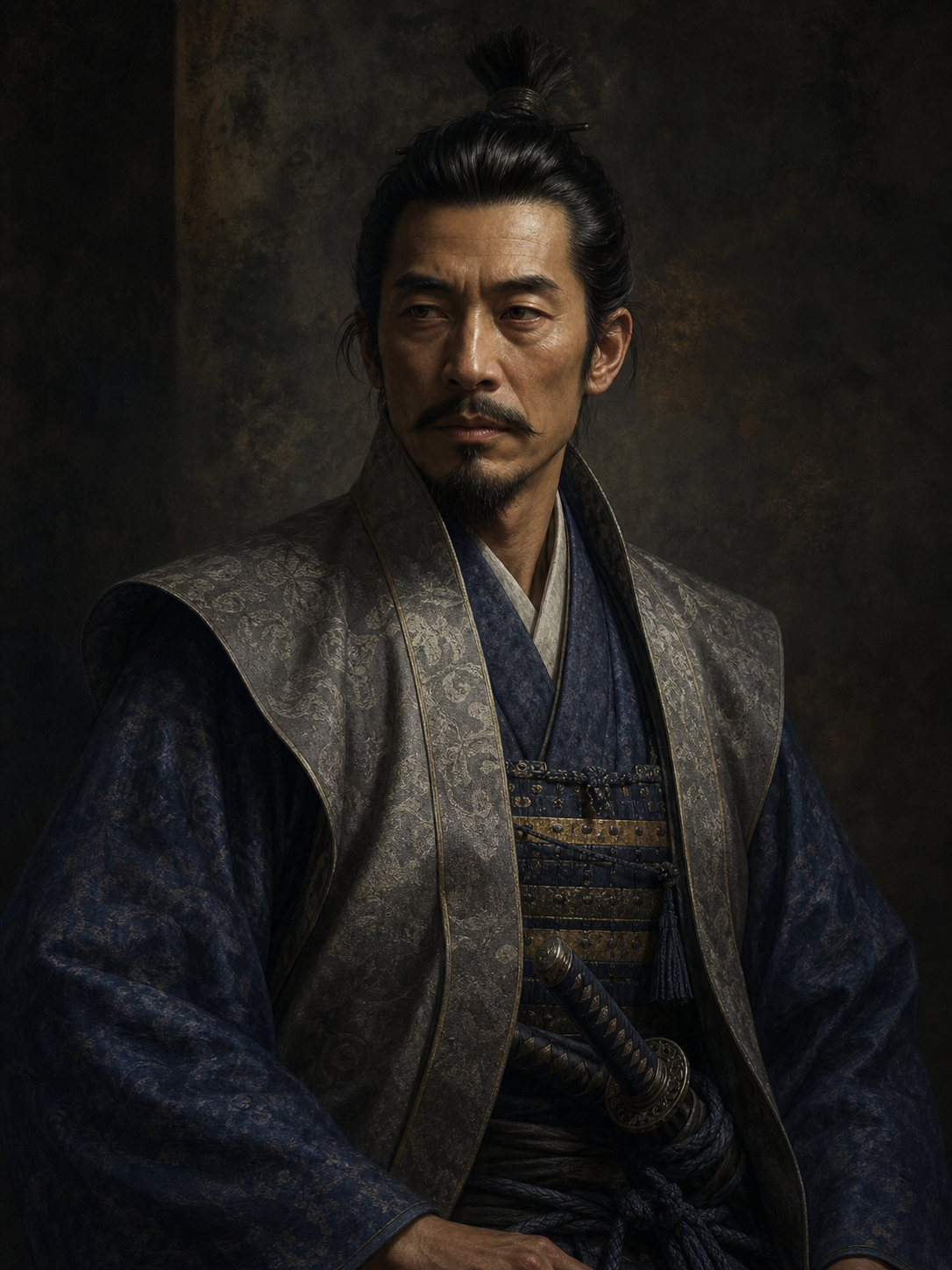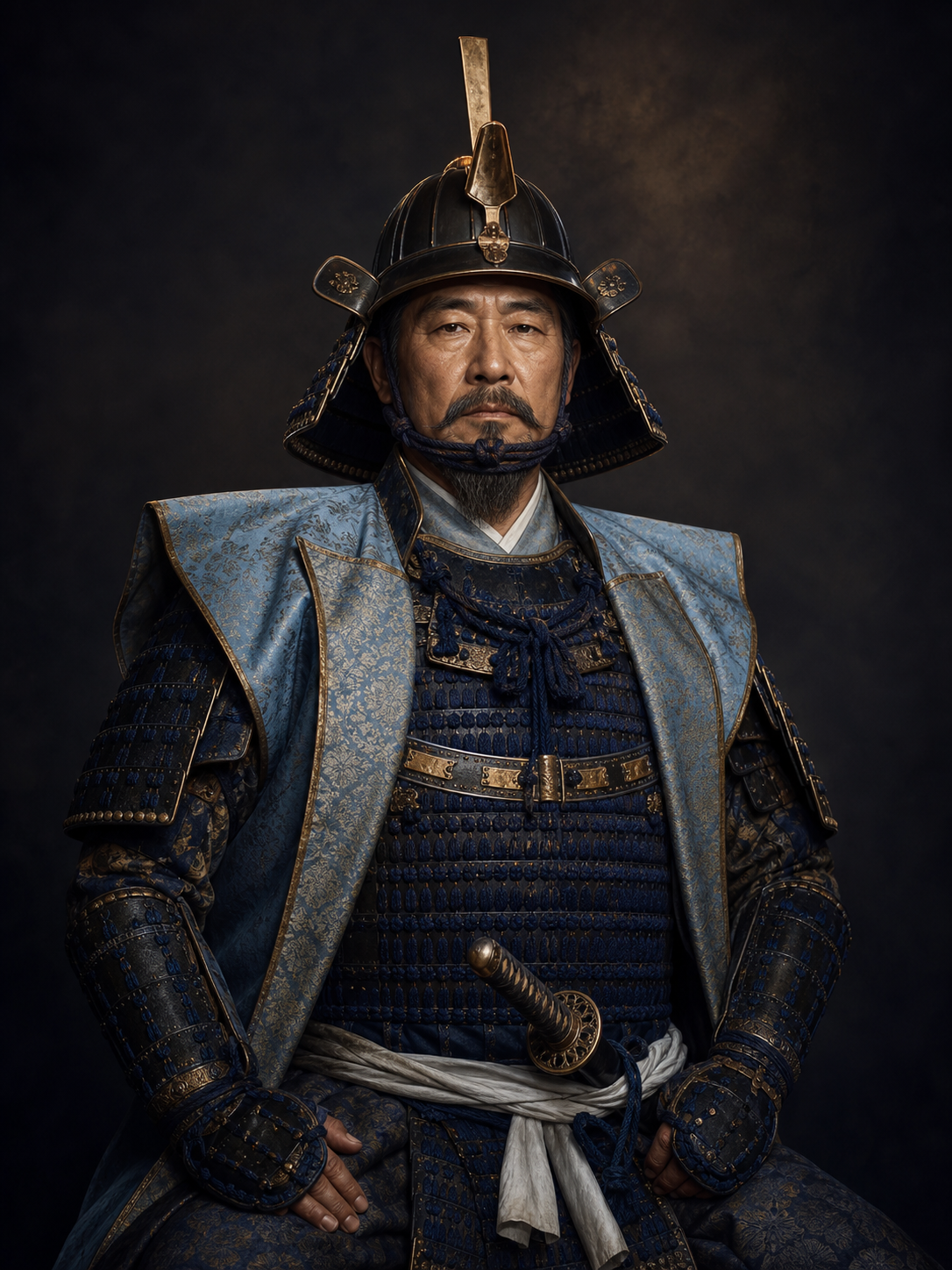
Who was Nobunaga?
Oda Nobunaga (1534–1582) was the daimyo who broke Japan out of a century of stalemated civil war. He inherited a small domain in Owari Province — today the western half of Aichi Prefecture — and within twenty-five years controlled the capital, the central provinces, and the political direction of the country.
He is remembered for the speed and ruthlessness with which he dismantled institutions that had stood for centuries: the Ashikaga shogunate, the armed Buddhist temple-fortresses, and the independence of the old provincial houses. He never held the title of shogun and never finished the job. In 1582 one of his own senior generals, Akechi Mitsuhide, turned on him in Kyoto and he died at the temple of Honnoji, with unification perhaps two-thirds complete.
Why is Nobunaga important?
- He turned a small province into the strongest power in central Japan, and was the first Sengoku lord to make national unification a realistic goal.
- He used firearms, long-term paid infantry and castle-town economics on a scale no rival matched, changing how Japanese armies were built.
- He destroyed the political power of the Ashikaga shogunate and of the militarised Buddhist orders, clearing the way for a new kind of central government.
- His two most capable subordinates — Toyotomi Hideyoshi and Tokugawa Ieyasu — completed the unification he began.
Early life
Nobunaga was the heir of Oda Nobuhide, a middle-ranking warrior family that served, in name, as deputies of the provincial governor of Owari. Contemporary and near-contemporary accounts describe him as an eccentric and badly behaved young man, and the nickname "the fool of Owari" attached to him early. How much of that reputation is genuine and how much is literary colour added later is impossible to settle.
When his father died around 1551, Nobunaga was not the obvious winner. He spent most of the 1550s fighting relatives and rival branches of his own clan for control of Owari, and only unified the province at the end of that decade.
Rise to power
In 1560 the far larger army of Imagawa Yoshimoto entered Owari. At the Battle of Okehazama Nobunaga attacked the Imagawa headquarters directly and killed Yoshimoto. The victory made his name nationally and freed his eastern border, since the young Tokugawa Ieyasu soon broke with the Imagawa and allied with him instead — a partnership that lasted until Nobunaga's death.
In 1568 he marched on Kyoto and installed Ashikaga Yoshiaki as shogun. Yoshiaki quickly discovered he was a figurehead and organised a coalition against him: the Azai and Asakura houses, the militant Ikko Buddhist league, and Takeda Shingen. The 1570s were a grinding war on several fronts at once — the Battle of Anegawa against the Azai and Asakura, a ten-year siege of the Ikko headquarters at Ishiyama Honganji, the burning of the temple complex on Mount Hiei in 1571, and the Battle of Nagashino against Takeda Katsuyori in 1575. He expelled Yoshiaki from Kyoto in 1573, effectively ending the Ashikaga shogunate.
How he governed
Nobunaga's administration is as important as his battles. He built Azuchi Castle on Lake Biwa as a permanent political centre rather than a fortress to retreat into. He issued "free market, free guild" (rakuichi rakuza) decrees that stripped monopoly rights from established merchant guilds in his castle towns, removed toll barriers on roads he controlled, and standardised weights used in his territories.
He also treated ability as a reason for promotion. Hideyoshi, who came from a farming or low-ranking foot-soldier background, rose to command armies; Akechi Mitsuhide, an outsider with no hereditary claim on the Oda, was given a province. That openness was unusual, and it cut both ways.
The Honnoji Incident and his death
In June 1582 Nobunaga was in Kyoto with a small guard, staying at the temple of Honnoji, while his armies were deployed far away in the west and north. Akechi Mitsuhide, ordered west to reinforce Hideyoshi, turned his troops on the capital instead. Nobunaga died in the burning temple; his body was never identified. His eldest son Nobutada was killed the same day.
Mitsuhide's motive has never been established. Contemporary sources record the act, not the reason, and every explanation offered since — personal humiliation, fear of being purged, loyalty to the imperial court or to the old shogunate, a conspiracy involving others — rests on later testimony or inference. See Honnoji Incident for what the sources actually support.
Was Nobunaga a demon king?
Nobunaga's reputation for cruelty is not invented. He destroyed the temple complex on Mount Hiei in 1571 with heavy civilian deaths, and his campaigns against the Ikko league were merciless. But the "Demon King of the Sixth Heaven" label comes from a letter he is said to have signed in mockery of a rival, and it was later fiction — from Edo-period stories to modern games — that turned it into a personality.
Historians today generally describe him as a conventional warlord of an extremely violent era who was unusually good at logistics, money and organisation, rather than as a uniquely demonic figure or as a modernising visionary.
Legacy
Nobunaga is probably the most depicted figure in Japanese historical fiction, from Edo-period puppet theatre to modern anime and video games, where he is often cast as a demon or a revolutionary. Those portrayals are entertainment, not evidence.
What survives from the record is a set of practical changes — a professional standing army, castle towns as economic hubs, taxation based on surveyed land, and the reduction of temple armies — that Toyotomi Hideyoshi and Tokugawa Ieyasu extended into a functioning national government.