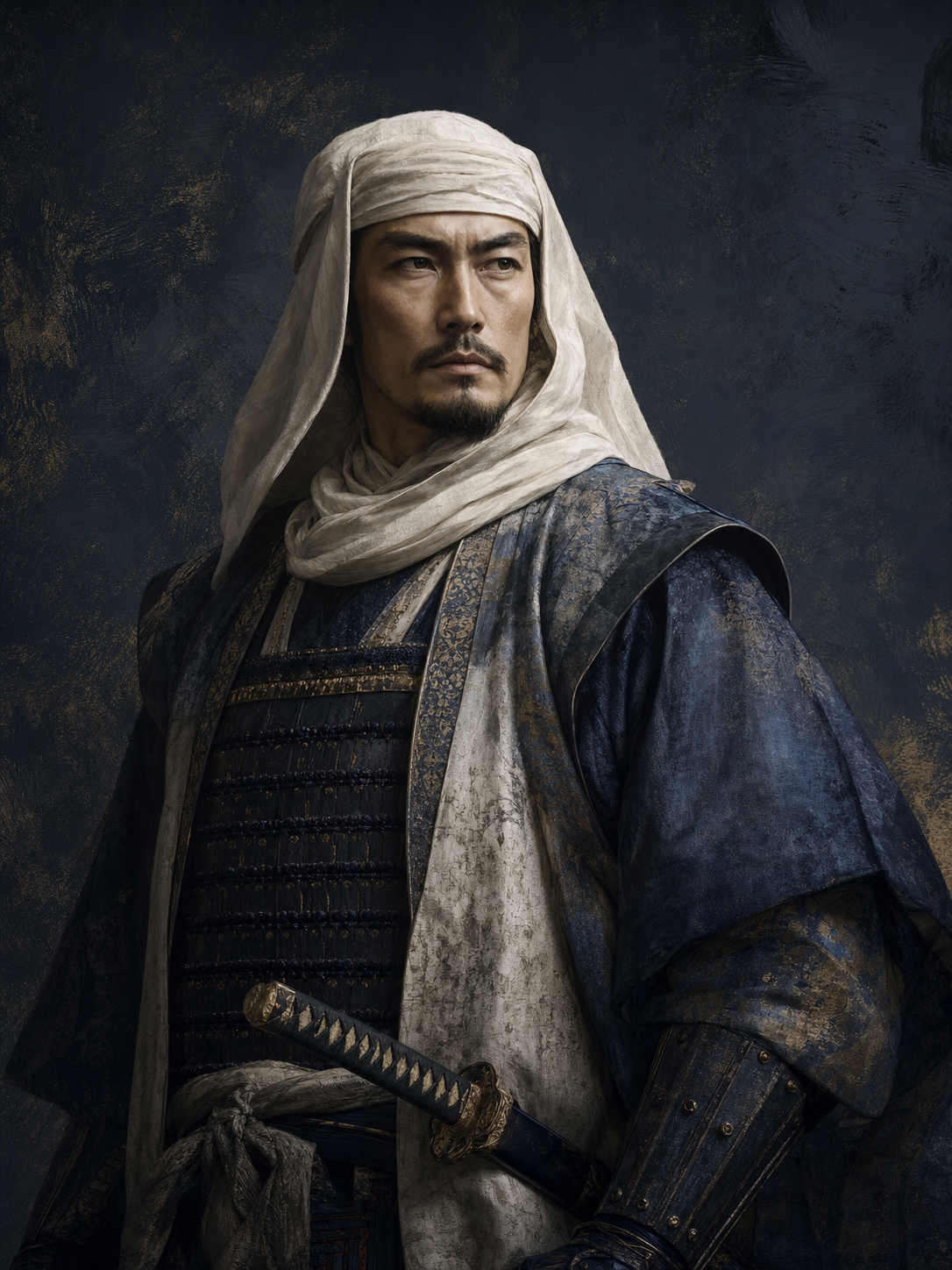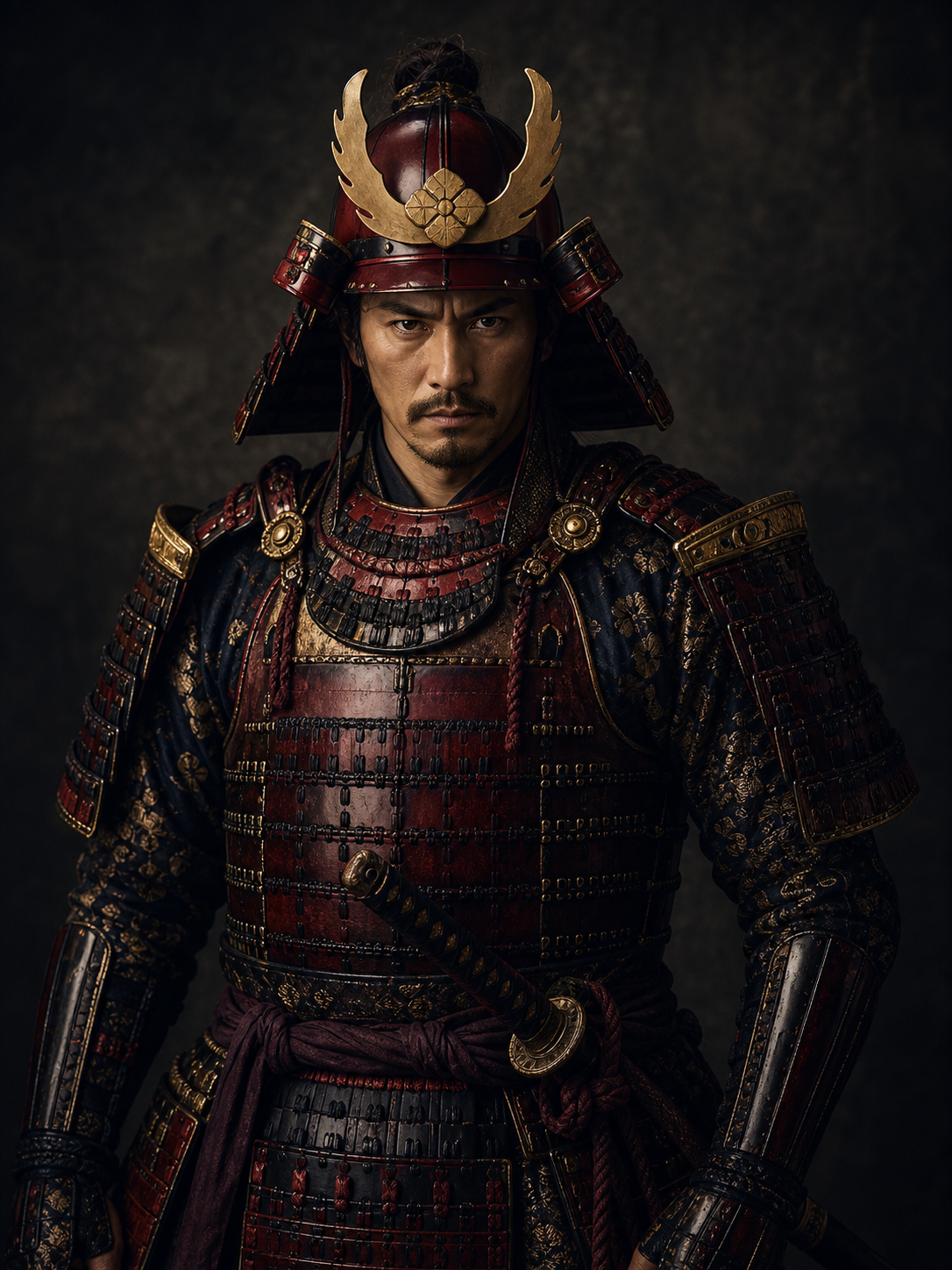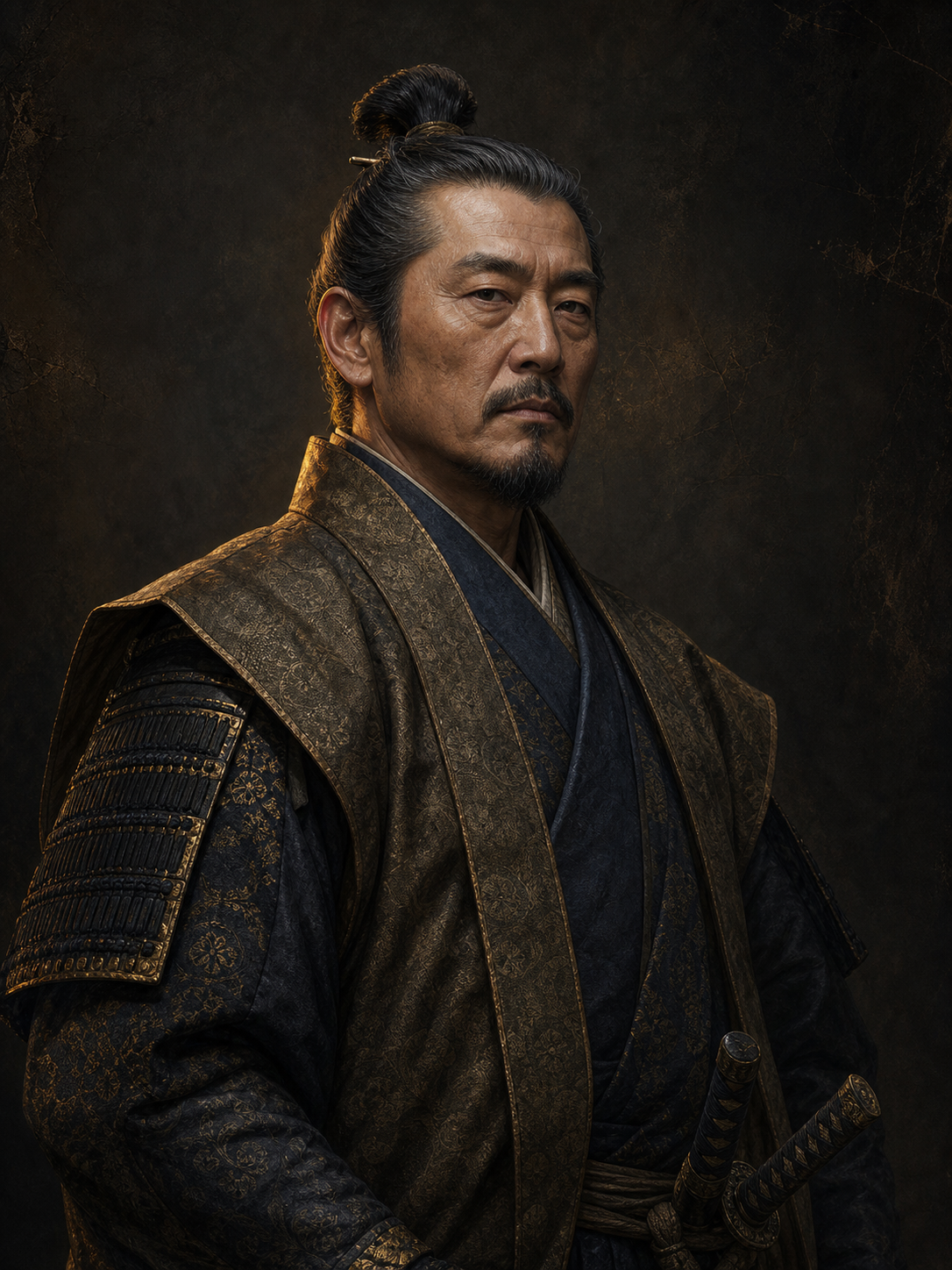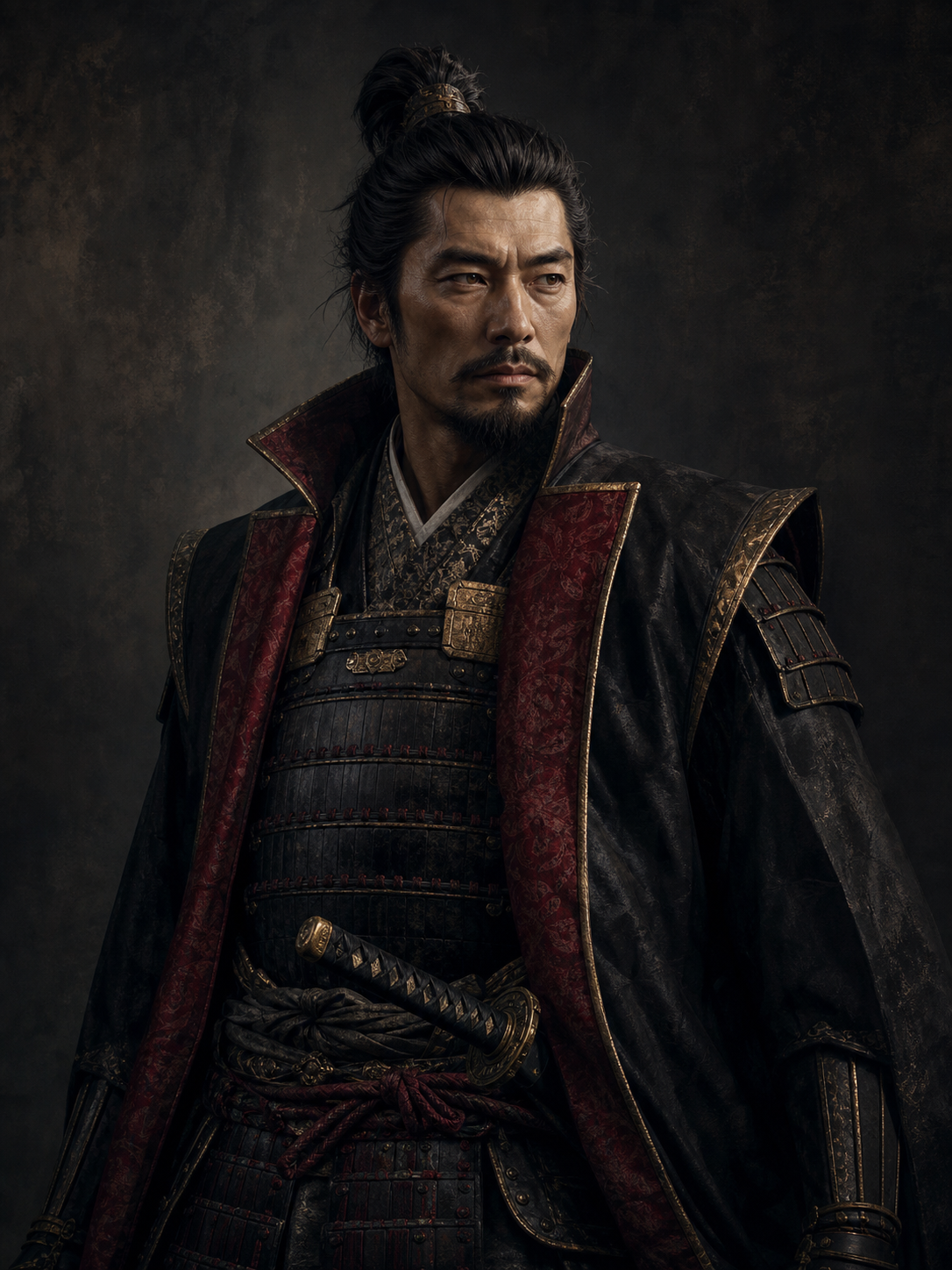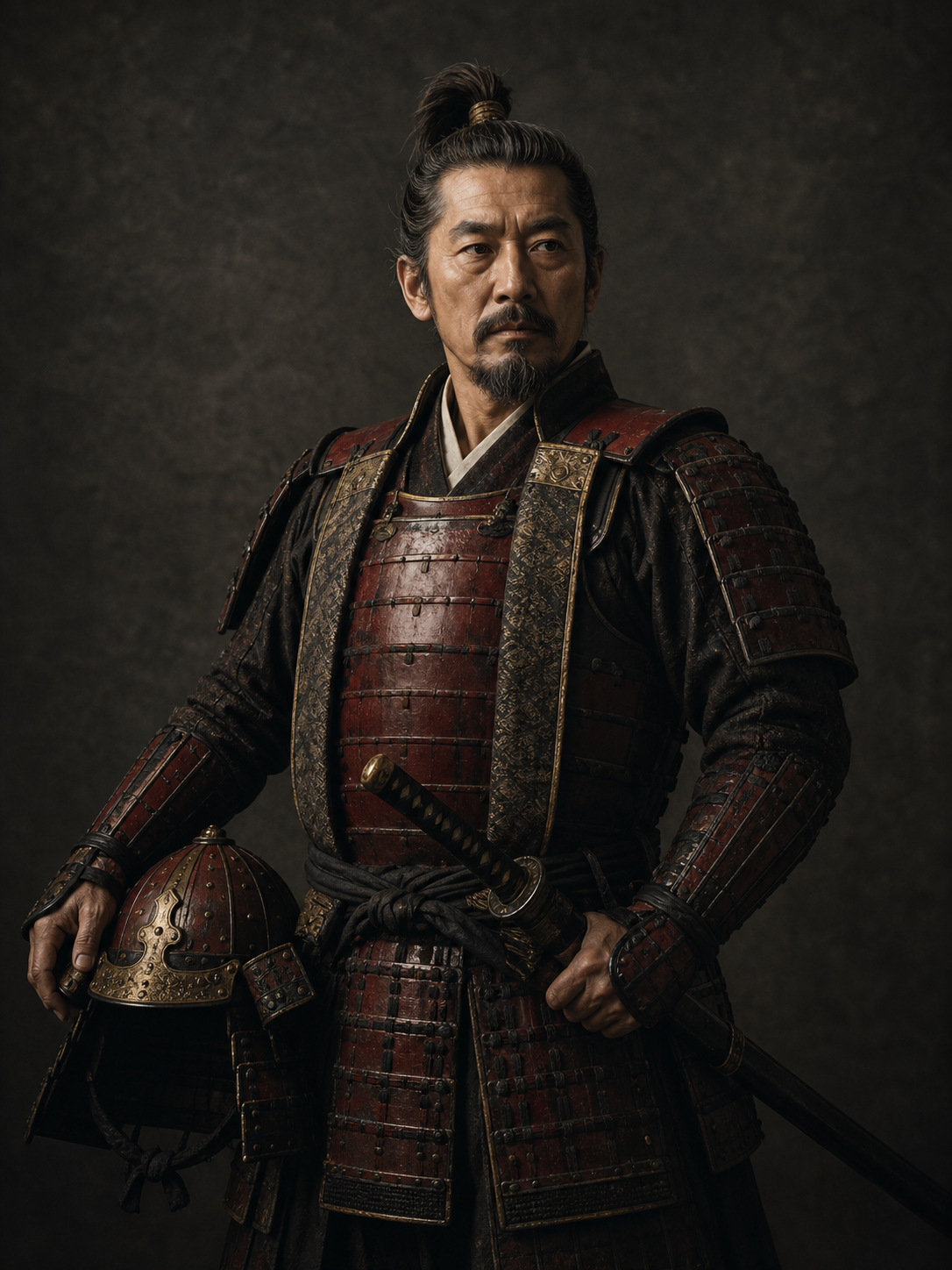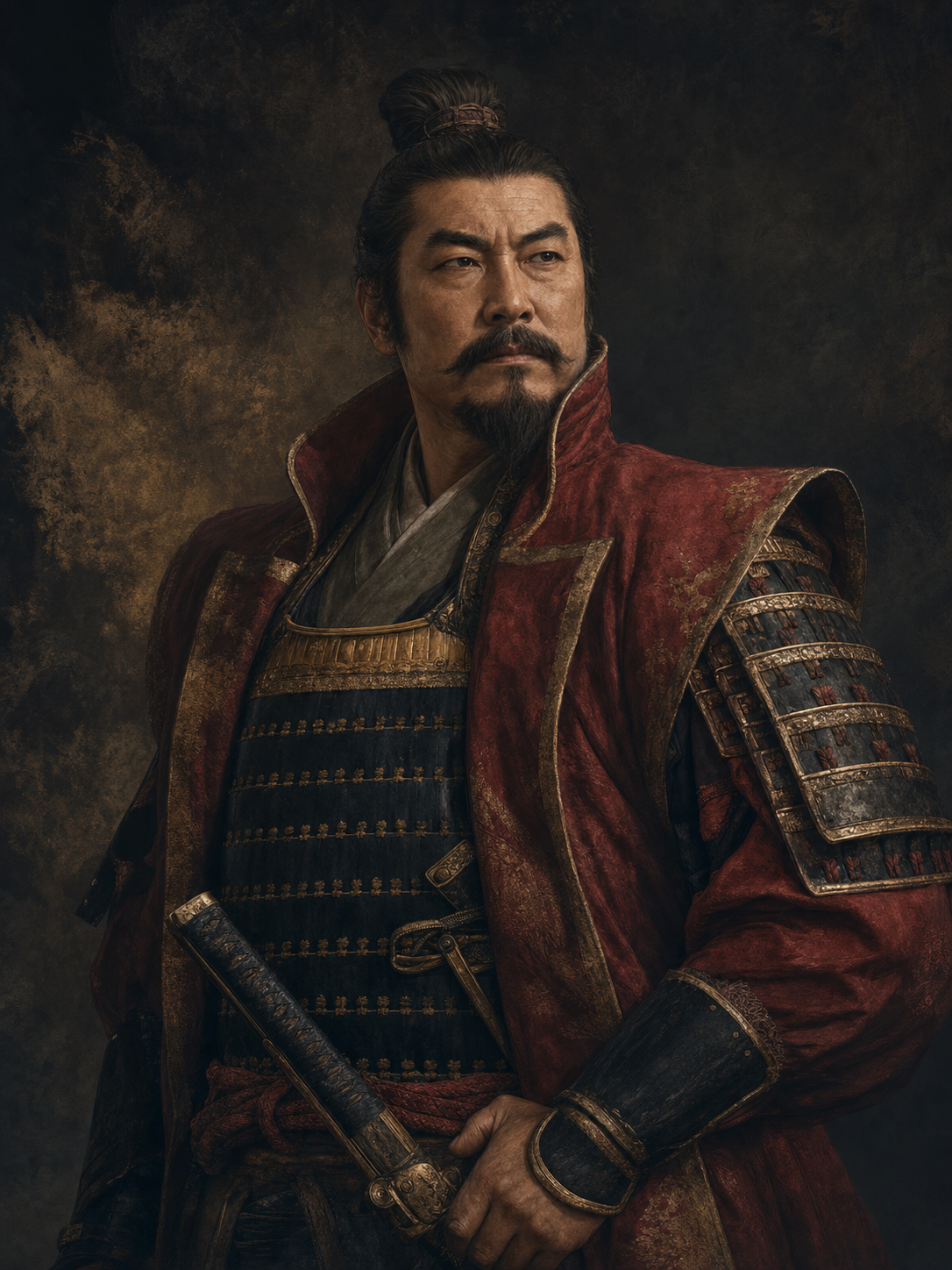
Who was Shingen?
Takeda Shingen (1521–1573) ruled Kai Province, the mountainous region west of modern Tokyo now called Yamanashi Prefecture. He built one of the most effective fighting forces of the era out of a poor, landlocked province, and was regarded by his contemporaries as the most dangerous commander in eastern Japan.
He is known as the "Tiger of Kai", and his banner carried a line from Sun Tzu — "swift as the wind, silent as a forest, fierce as fire, immovable as a mountain" — usually abbreviated in Japanese as Furinkazan. His long rivalry with Uesugi Kenshin produced five confrontations at Kawanakajima and is the most famous personal duel of the Sengoku period.
Why is Shingen important?
- He turned a poor mountain province into a first-rank military power, largely through flood control, mining and a strict legal code rather than conquest alone.
- His rivalry with Uesugi Kenshin at Kawanakajima is the defining set-piece of eastern Sengoku warfare.
- He beat Tokugawa Ieyasu decisively at Mikatagahara in 1572, the closest anyone came to ending Ieyasu's career early.
- His death in 1573, mid-campaign, removed the strongest threat to Oda Nobunaga at exactly the moment Nobunaga was most exposed.
Taking Kai
Shingen — then called Harunobu — took control of the Takeda in 1541 by exiling his own father, Nobutora, to Suruga Province. Sources describe the move as backed by senior retainers who preferred the son. He then spent the 1540s and 1550s conquering neighbouring Shinano Province, which brought him up against Echigo, and therefore against Kenshin.
He governed through a written house code, the Koshu Hatto no Shidai, and is credited with major flood-control works on the Kamanashi and Fuefuki rivers — the embankment traditionally known as Shingen's Levee — and with developing gold mining in his territory.
Kawanakajima
Between 1553 and 1564 Shingen and Kenshin met five times on the Kawanakajima plain in northern Shinano. Only the fourth encounter, in 1561, was a full battle; the others were manoeuvres, standoffs and skirmishes. Even the fourth is difficult to reconstruct, and casualty figures in later chronicles are not reliable.
The single most famous image of the era — Kenshin riding into Shingen's command post and striking at him while Shingen parries with his war fan — comes from later chronicles and cannot be confirmed from contemporary documents. See Battles of Kawanakajima.
The march west and his death
In 1572 Shingen finally moved west against the Oda–Tokugawa alliance. He crushed Ieyasu at the Battle of Mikatagahara in the winter of that year, and Nobunaga — then fighting on several fronts — was in serious danger.
In the spring of 1573 Shingen fell ill on campaign and died. The cause is not certain; illness is the standard account, and the dramatic version in which he is shot by a sniper is a later story. His death was concealed for a time, on his reported instruction, to give his successor Takeda Katsuyori room to withdraw.
Legacy
The Takeda cavalry's reputation is partly real and partly the product of the Koyo Gunkan, an influential military chronicle compiled in the early Edo period that shaped everything written about Shingen afterwards. Historians treat it as a valuable but unreliable source.
Many Takeda retainers were absorbed into Tokugawa service after the clan fell in 1582, and Takeda military practice survived inside the Tokugawa army. Shingen remains a fixture of Japanese historical drama and of strategy games worldwide.