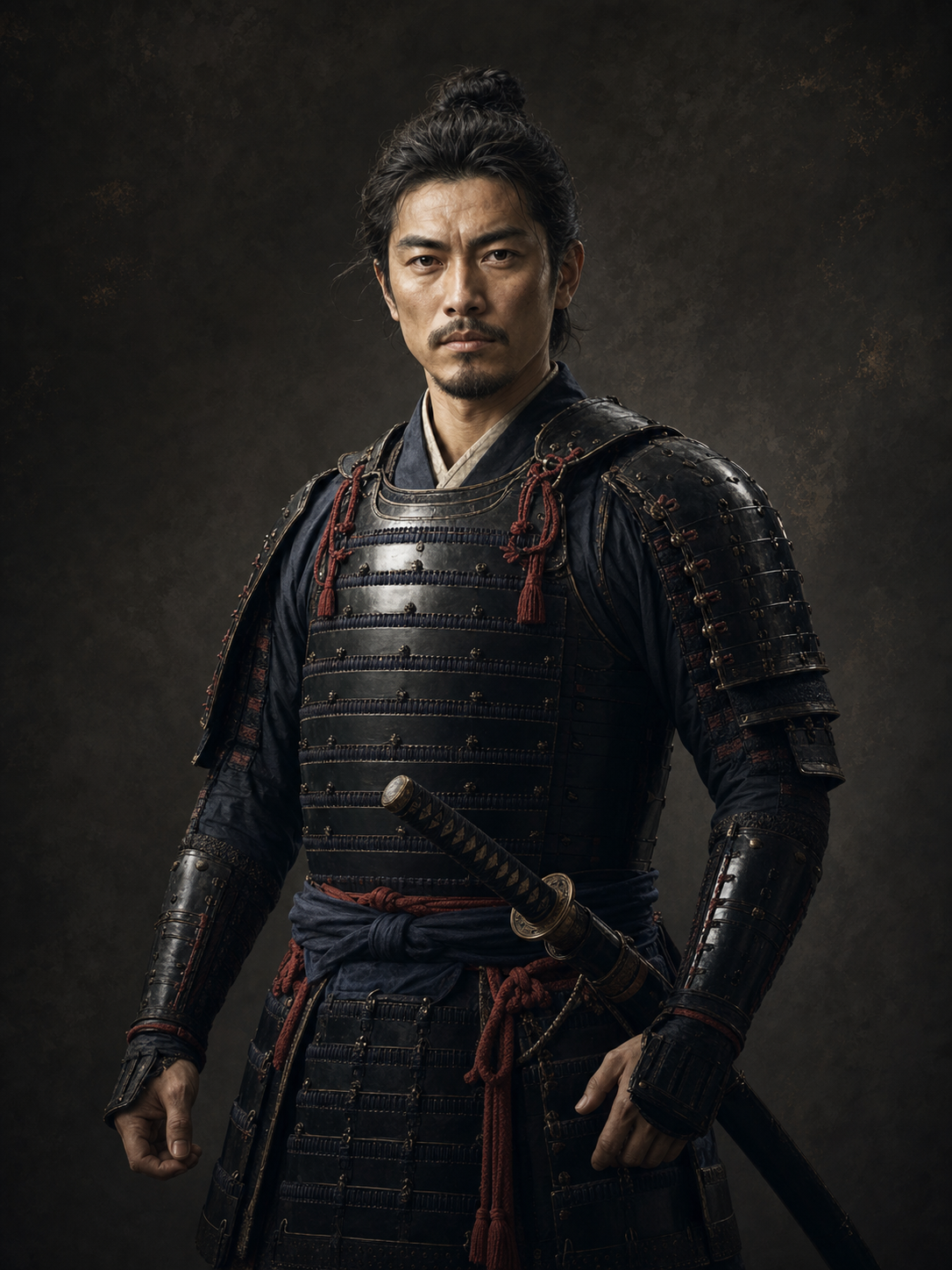
Who was Nobuyuki?
Sanada Nobuyuki (1566–1658) was the elder son of Sanada Masayuki and the brother of Sanada Nobushige. In 1600 he took the Tokugawa side while his father and brother took the other, and that decision is why the Sanada exist today as anything more than a story.
He is the least dramatic member of a famously dramatic family, and he lived to ninety-two — long enough to see the world his father fought in disappear entirely.
Why is Nobuyuki important?
- His marriage to a daughter of Honda Tadakatsu tied the Sanada to the Tokugawa inner circle.
- He petitioned successfully for his father's and brother's lives after Sekigahara, turning execution into exile.
- He ruled Ueda and then Matsushiro for more than fifty years, establishing a domain that lasted until 1871.
- His choice is the clearest documented example of the era's survival strategy: divide the family across both sides.
The parting of the roads
In 1600 the Sanada were on the march with the Tokugawa when word came that the Western Army had risen. By the traditional account the three men met at Inubuse and separated: father and younger son back to Ueda for the Toyotomi cause, elder son onward with the Tokugawa.
Nobuyuki then had to fight his own family. He took part in operations around Ueda while his father held it against Hidetada. Whether the split was pre-arranged or simply the result of three different judgements is not certain from the documents, but the outcome was the same.
Fifty years of administration
After the war he was confirmed in Ueda, and in 1622 was transferred to Matsushiro in northern Shinano, where he spent the rest of his long life. He handled land surveys, flood control on the Chikuma river, and the difficult business of being the loyal Tokugawa vassal whose brother had died attacking Ieyasu.
He retired formally in 1656 and died two years later. His descendants held Matsushiro through to the end of the Edo period.
Legacy
His wife, known as Komatsuhime, is remembered for refusing to open Numata Castle to her own father-in-law when he approached during the 1600 campaign — an episode recorded in Sanada family tradition and much dramatised since.
Matsushiro preserves Sanada residences, documents and the family's archive, which is one of the better-documented daimyo collections from the period.