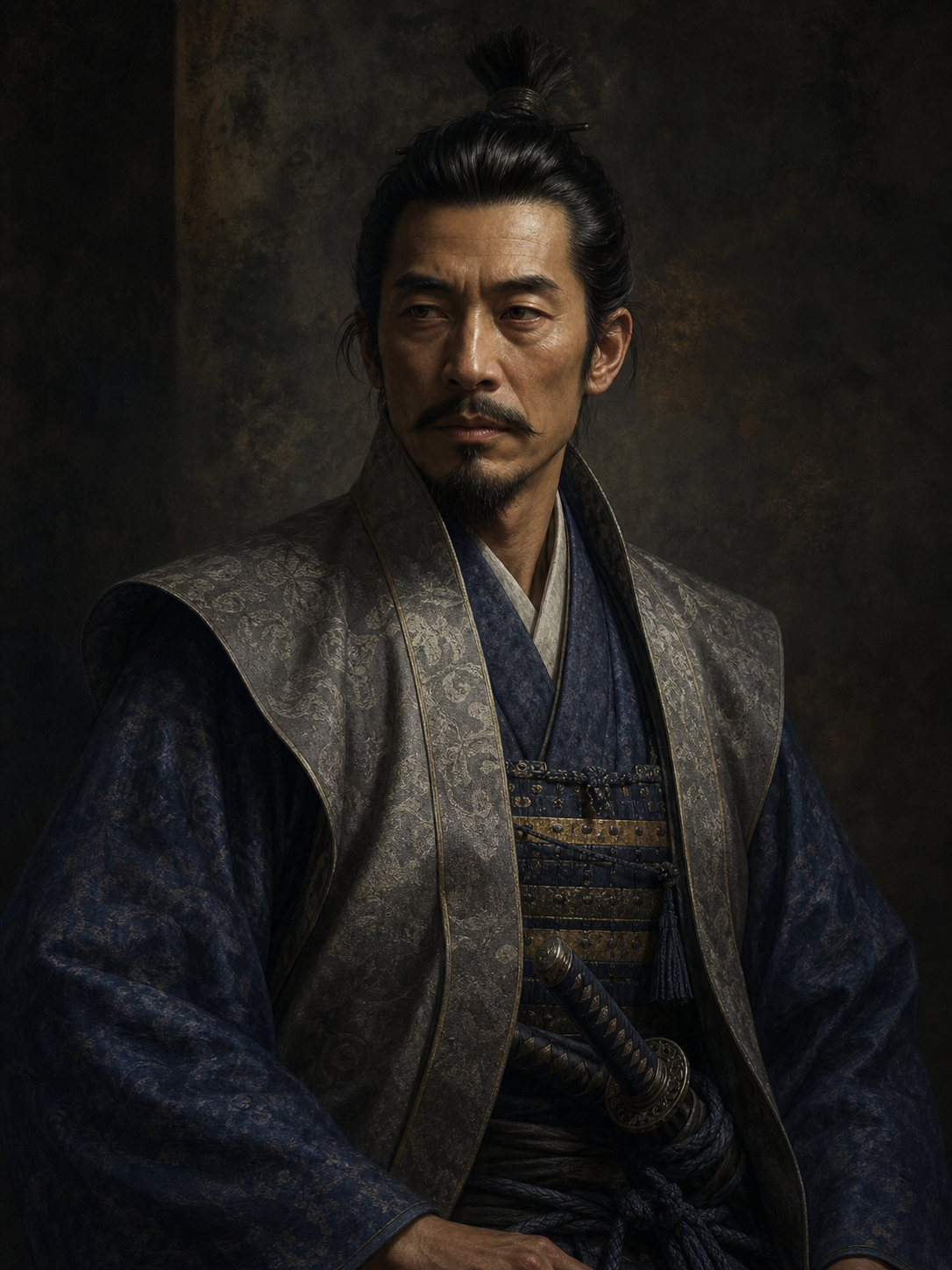
Who was Yasuke?
Yasuke was an African man who arrived in Japan in 1579 in the party of the Jesuit visitor Alessandro Valignano, and who entered the service of Oda Nobunaga in 1581. He was present in Kyoto in 1582 when Nobunaga was killed at Honnoji Incident.
He is one of the most talked-about figures of the period in English, and one of the most thinly documented. Everything reliably known about him comes from a handful of short passages in Japanese chronicles and Jesuit correspondence covering about three years.
Why is Yasuke important?
- He is the only African man known by name to have served a Japanese lord in the sixteenth century.
- His presence is direct evidence of how far the networks that brought Europeans to Japan actually reached.
- The Japanese sources that mention him show a court reacting to something genuinely unfamiliar, which tells us about the period as well as about him.
- He has become a case study in how thin evidence gets turned into confident storytelling.
What the sources say
Japanese accounts related to the Oda house record that in 1581 a black man was brought before Nobunaga, that his arrival drew large and disorderly crowds, that Nobunaga had him wash to confirm his skin colour was not paint, and that Nobunaga took him into his service, gave him a stipend, and had him attend on him. A name rendered as Yasuke appears in this connection.
Jesuit letters from the same years confirm that a black man in Valignano's party remained in Japan with Nobunaga, and mention gifts to him. After Honnoji, Jesuit correspondence reports that he was taken by Akechi Mitsuhide's men and handed over to the Jesuit church in Kyoto rather than executed.
That is essentially the whole record. Where he was born, what his original name was, how old he was, and what became of him after 1582 are not recorded.
Was Yasuke a samurai?
This is argued about intensely, and the honest answer is that the sources do not settle it. What they support is that he received a stipend, was given a residence and a short sword according to one Jesuit account, and attended Nobunaga personally. Those are markers of retainer status.
Whether that amounts to "samurai" depends on what the word is taken to mean. In the sixteenth century the boundary between a warrior and an armed servant of a lord was not yet the fixed legal category it became under the Tokugawa a generation later. Writers who state flatly that he was a samurai, and writers who state flatly that he was merely a curiosity or an attendant, are both going past the evidence.
Yasuke in modern culture
Yasuke appears in novels, an anime series, and video games, and each treatment fills the enormous gaps in the record with invention. That is what fiction is for; the problem only arises when the inventions are repeated as history.
If you are coming to this page from a game or a show, the useful thing to know is that almost every specific detail of his personality, background and later life in those works is created, because the sources contain none of it.
Legacy
Yasuke matters historically less as an individual — about whom we know very little — than as evidence. His presence in Kyoto in 1581 shows how directly the Indian Ocean and Portuguese networks reached into the politics of central Japan.
He also demonstrates something about Nobunaga: an unusual willingness to attach useful and interesting people to himself regardless of where they came from, which is consistent with how he promoted Toyotomi Hideyoshi and Akechi Mitsuhide.