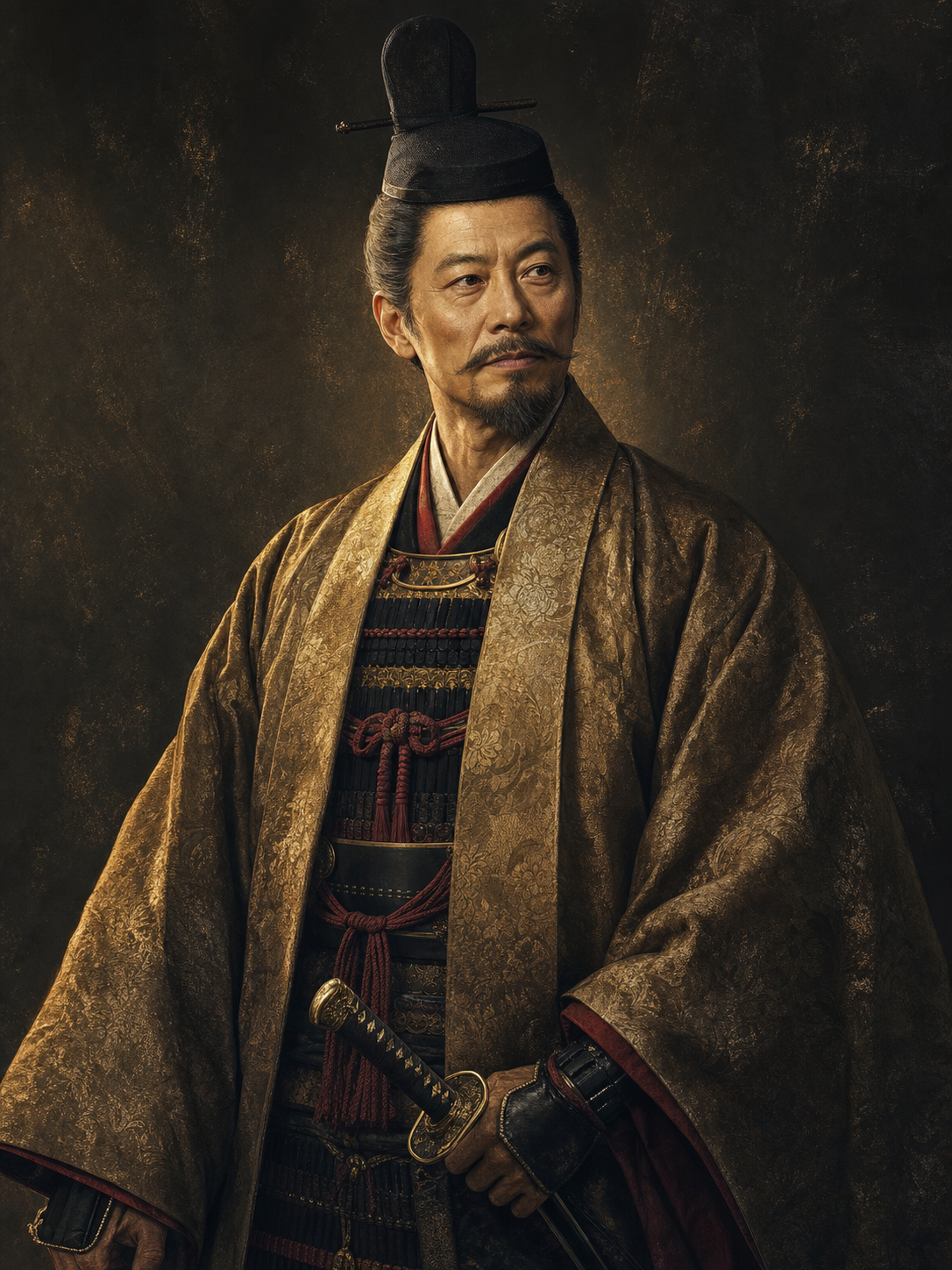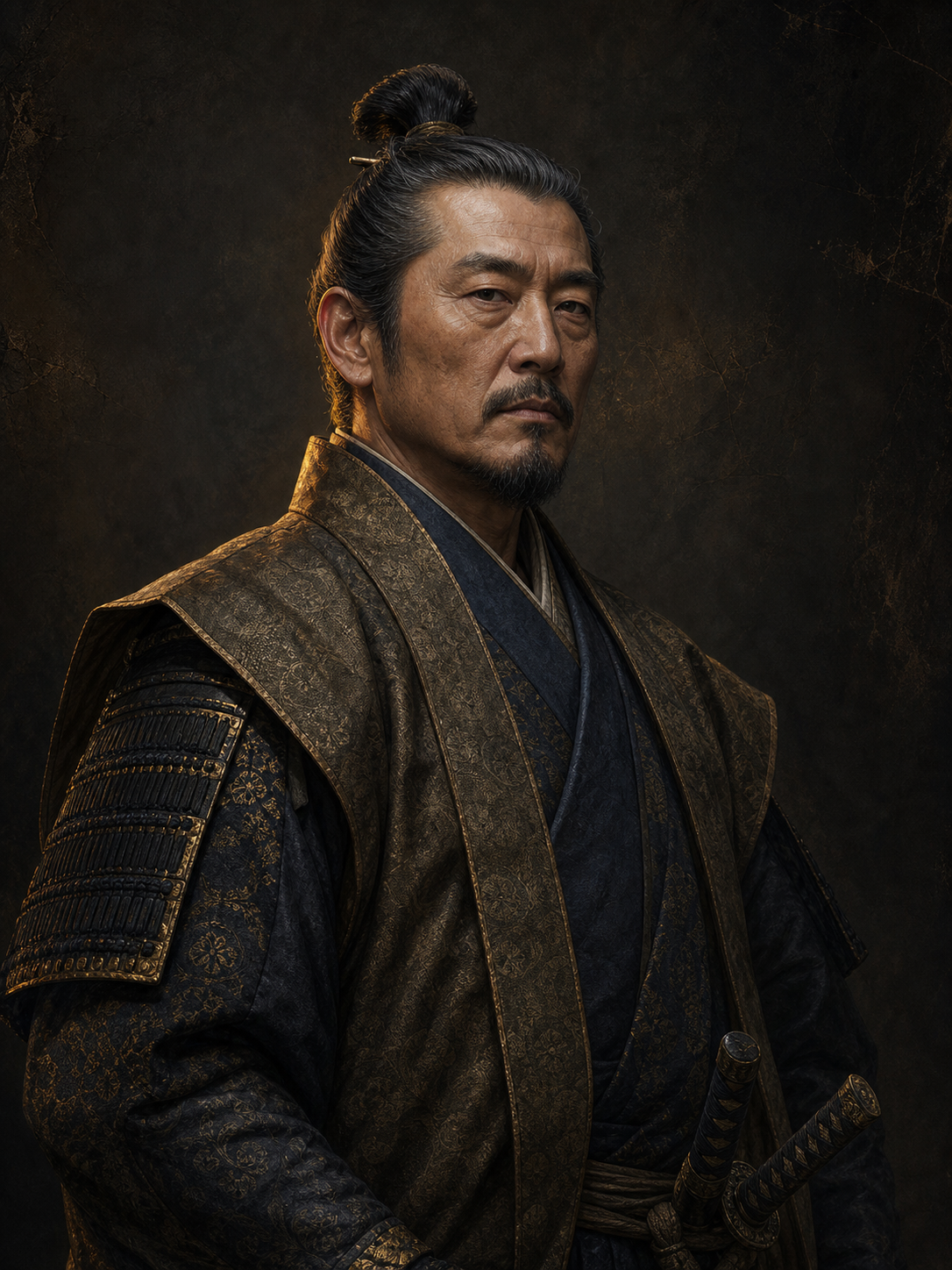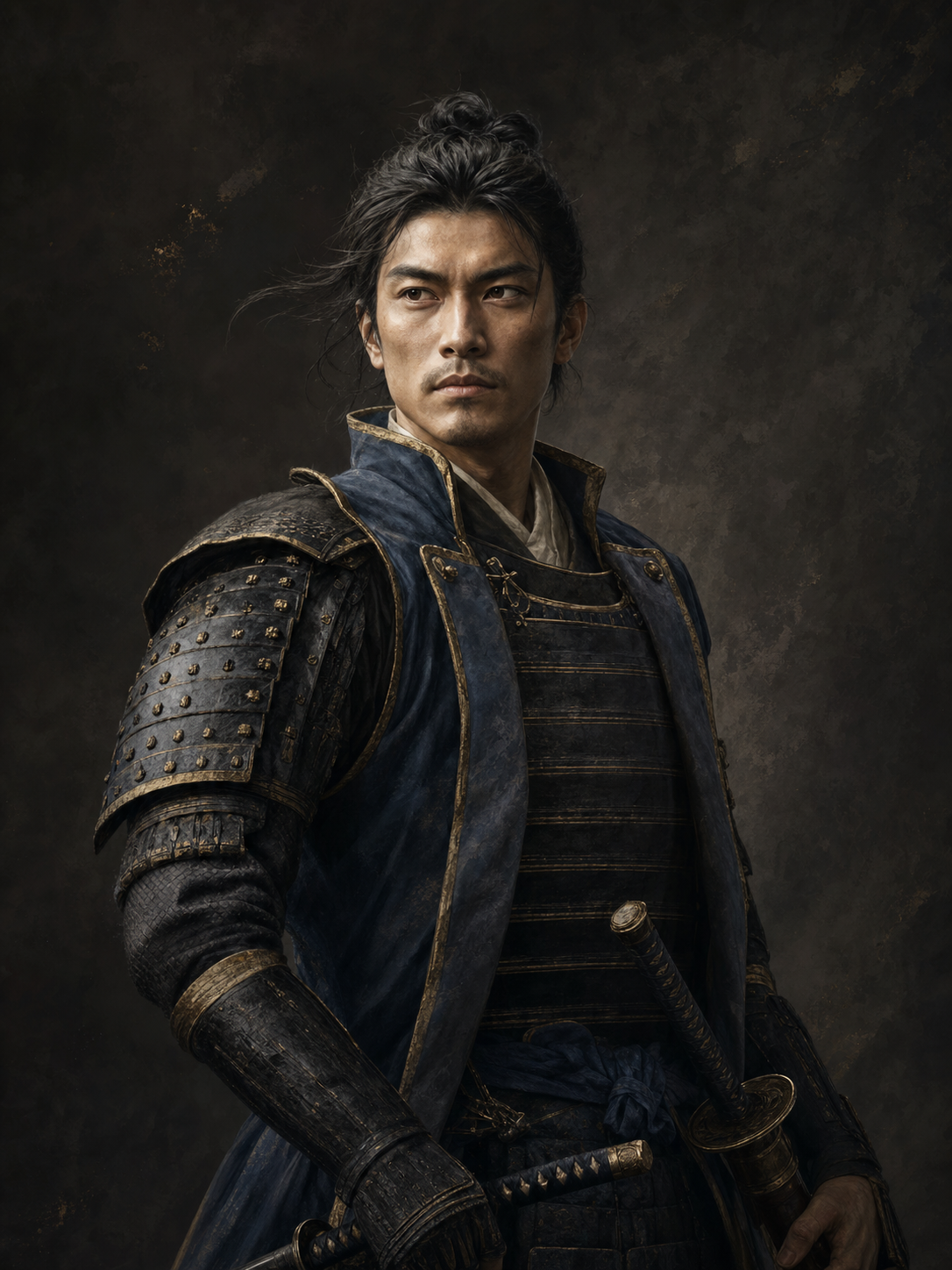
Who was Masamune?
Date Masamune (1567–1636) was the dominant lord of northern Japan and the founder of Sendai, now the largest city in the Tohoku region. He is instantly recognisable in Japanese culture by the crescent moon crest on his helmet and the eyepatch: he lost the sight of his right eye in childhood, traditionally to smallpox, which gave him the nickname "the One-Eyed Dragon".
He was born a generation too late to compete for national power. By the time he had conquered his neighbours in the north, Toyotomi Hideyoshi was already unifying the country, and Masamune's career became one of calculated submission, ambitious side projects, and long survival.
Why is Masamune important?
- He built the largest domain in northern Japan by his early twenties, taking over most of southern Mutsu.
- He founded Sendai and developed it into a major castle town, with land reclamation and canal works that reshaped the region's agriculture.
- He sent the Keicho embassy across the Pacific and Atlantic to Spain and Rome in 1613 — one of the very few Japanese diplomatic missions to Europe before the country closed.
- He survived the transition from Sengoku warfare to Tokugawa peace with his house intact, and his descendants ruled Sendai until 1868.
Conquest of the north
Masamune took over the Date at seventeen and immediately went on the attack. His victory at Suriagehara in 1589 broke the Ashina house and gave him control of the Aizu basin, making him the strongest lord in the north.
It did not last a year. Hideyoshi had ordered a general halt to private warfare, and Masamune had ignored it. When he finally reported to Hideyoshi's camp at the Odawara Campaign in 1590 — late, and by tradition wearing a white death robe to signal his readiness to be executed — he was stripped of Aizu but allowed to live.
Under Hideyoshi and Ieyasu
Masamune served in the Korean campaigns, and at the time of the Battle of Sekigahara fought on the Tokugawa side in the northern theatre against the Uesugi. He was rewarded, though less than he had hoped, and settled at Sendai, where he began building a castle and a planned city in 1601.
He was suspected more than once of playing his own game — including a documented episode in which he was accused of encouraging a rebellion he then helped suppress — but he was never caught in a way that could not be talked away.
The Keicho embassy
In 1613 Masamune had a European-style galleon built in his domain and sent a mission led by his retainer Hasekura Tsunenaga to New Spain (Mexico), then on to Madrid and Rome, seeking direct trade and, in the framing used to the Pope, missionary support.
The embassy reached Rome in 1615, but by the time Hasekura returned in 1620 the shogunate had begun suppressing Christianity, and nothing came of it. What Masamune actually intended — trade, prestige, or leverage against Edo — is still debated. The documents survive in Sendai and are registered as a Japanese national treasure.
Legacy
Sendai's modern identity is built on Masamune: the castle site, the annual Tanabata festival, and the city's founding date all trace to him. His armour, with its towering crescent moon crest, is one of the most copied designs in Japanese popular culture.
In games and anime he is usually drawn as a flamboyant young rebel, sometimes with six swords, which is invention. The historical Masamune was a careful political operator who lived to nearly seventy under a government he had once considered fighting.